Guest Blog: Crewing UTMB — Take 2!
Written by Lori Dithurbide
Crewing Kelsey at UTMB 2024 - Read Lori’s recap from the previous year
The journey to crew Kelsey again for Ultra Trail du Mont Blanc (UTMB) in 2025 began not long after we returned from the 2024 race. Kelsey herself waited about 15 minutes post-race in 2024 to decide she wasn’t finished with UTMB and believed she could still cut some time and climb the ranks the following year. I wasn’t too surprised when she called me in November to say that she was leaving for Mexico in the next couple of days to run a race that would give her a qualifying chance for the 2025 UTMB.
So off Kelsey goes to Puerto Vallarta, finishes 2nd woman (10th overall) in a 152km race, which took her just under 23.5 hours, earning herself another direct entry to the UTMB World Series finals in Chamonix, France. It also didn’t take me long to raise my hand and say, “I’ll go back!... if you’d like me to?”. Thankfully my self-invitation was accepted and weeks later, in Winter 2025, planning began.
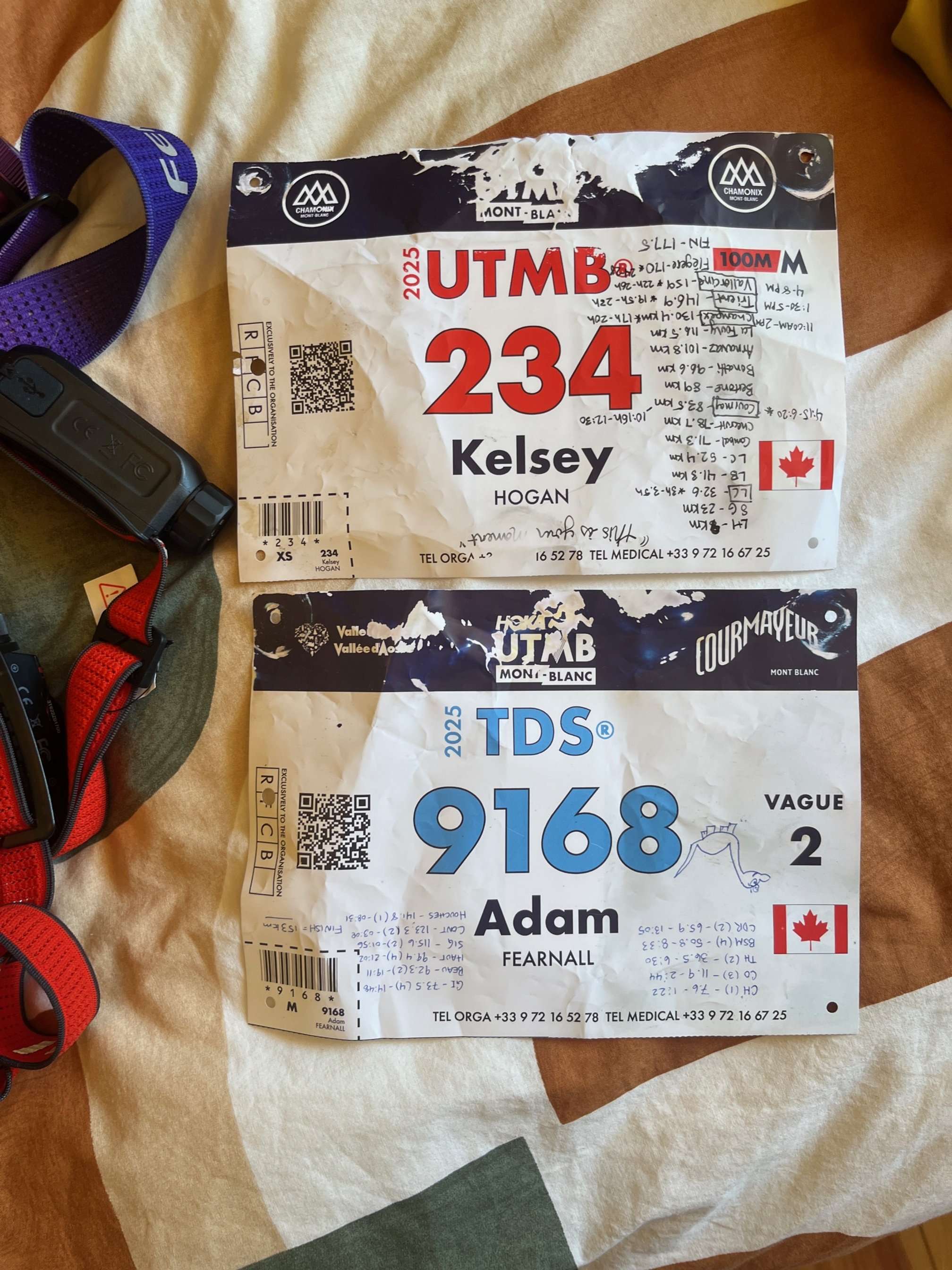
Somewhere in the planning phase, Kelsey’s partner and crew captain, Adam Fearnall, decided he wanted in on the UTMB week racing experience. He signed up for TDS (Les Traces du Ducs de Savoie), described as beautiful, technical, wild, and demanding. TDS leaves Courmayeur, Italy at midnight on the Monday of UTMB race week (so that the most dangerous parts of the race can be completed in daylight), is 153km long with just over 9000m of ascending and descending, with a Chamonix finish.
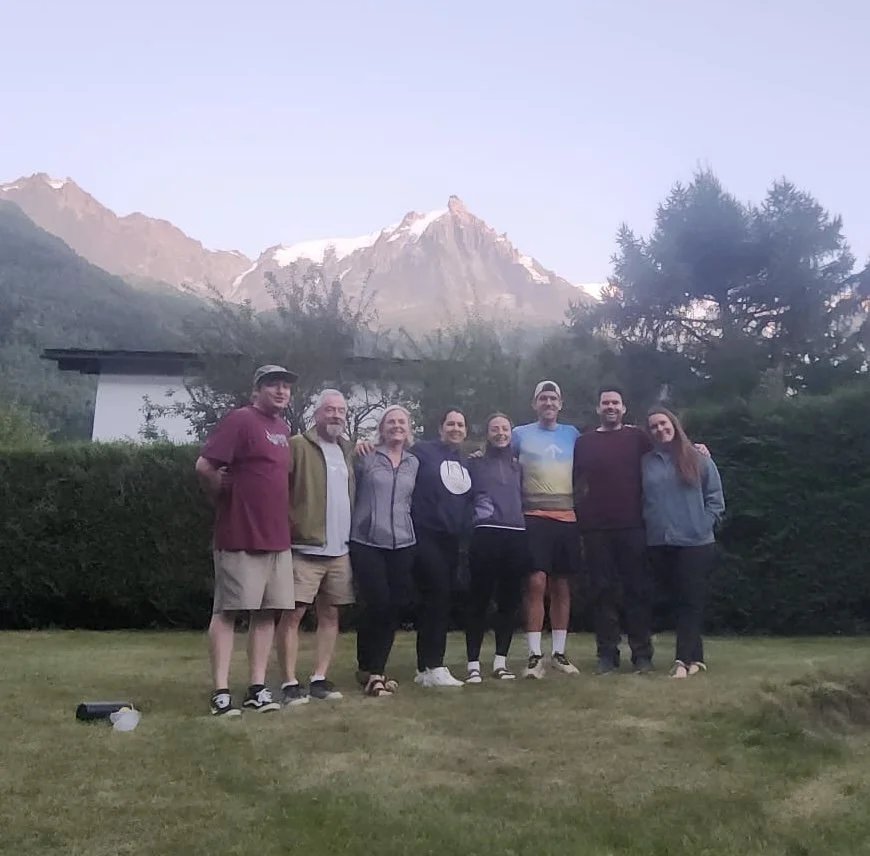
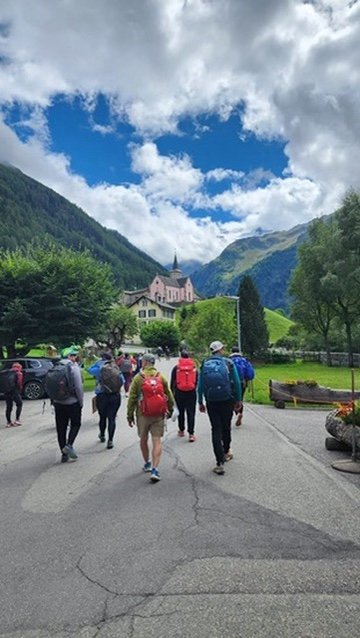
The crew and runners assembled in the garden at our team chalet in Mont Blanc.
My preparation to crew two races in one week was not exactly ideal. While I was the rookie on the crew the previous year, I came in with curiosity and naivety, asking many, many, questions. I had also had the time to relax during a vacation in the weeks immediately prior and enjoyed the benefits of being on sabbatical from my position at Dalhousie University following the race. The weeks leading up to UTMB 2025 however, were spent preparing for an impending labour dispute at Dalhousie, preparing to return to teach class the day after returning from Chamonix, and the ever stress-inducing Air Canada flight attendants’ strike, which grounded flights for multiple days leading up to the race. Luckily, I had booked with another airline, however many of the other crew members were flying AC, so the possibility of solo crewing was front of mind.
Off we go, flying to Geneva, Switzerland, then hopping on a bus to Chamonix, and a quick 20-minute walk to our chalet in the picturesque town at the foot of Mont Blanc. Kelsey and Adam had been in the area training and acclimatizing for a couple of weeks and met me, Kelsey’s parents Noel and Jane, and her brother Riley on Friday, August 22. Two other crew members, Kelli-Nicole and Steven, were arriving the following day. Once everyone made it to Chamonix safely and on time, I had a sense of relief as we could then start some of the more detailed logistical planning – TDS was starting in 2 days!
Adam’s TDS
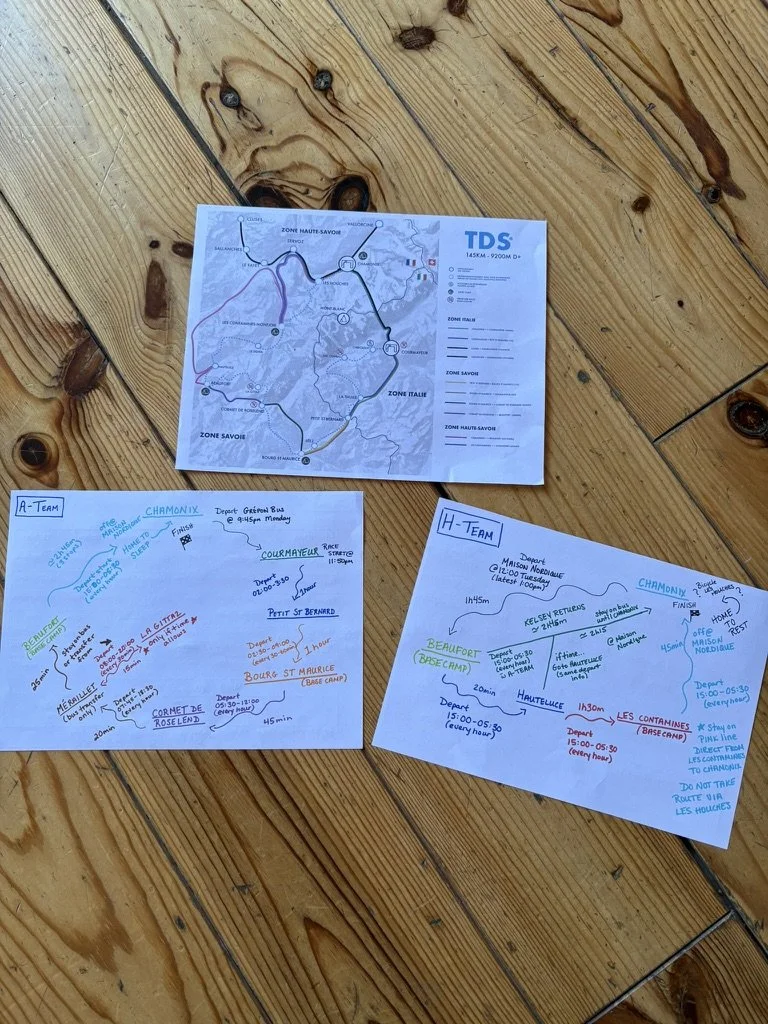
UTMB organizes buses that transport crew members along the race route to follow their runners, meeting them at aid stations to provide support. It’s a complicated system of schedules and logistics to understand!
Sunday (T-1 day until TDS) was a day full of prep meetings, logistical planning, and aid-station rehearsals. The weather this year was going to be more of a factor than the previous year, and Adam’s race (along with just about every other race that week) already had a route change announced pre-departure to avoid exposed areas during a forecasted thunderstorm for Tuesday. While we were familiar with the crew bus routes and logistics for Kelsey’s race, TDS was a different beast. Even though the race length was similar to UTMB, there were only three crewed aid stations where we could directly assist Adam. With a departure on the other side of Mont Blanc in Courmayeur, Italy at midnight, and anticipated 2 overnights, planning (and flexibility) was key. To ensure crew members could get some rest over the next couple of days, Adam’s crew was split into 2 teams. The first team was me, Kelli-Nicole and Steven who would accompany Adam to Italy at the start line, follow him through the night and into France for one cheering spot in Petit St. Bernard (36.5km), then onto the first crewed aid station in Bourg St. Maurice (50.8km), another cheer spot at Cormet de Roselend (65.9km), and then onto the second crewed aid-station in Beaufort (92.3km). Beaufort would be where we would make the hand-off and switch crew teams so that Jane, Noel, and Riley could take over until the finish line. Kelsey was solely on the day shift, traveling to Beaufort with the second team, and back to Chamonix before the second overnight to ensure her own rest for her race later in the week. We would all then meet Adam at the finish line sometime Wednesday morning if all went to race plan.
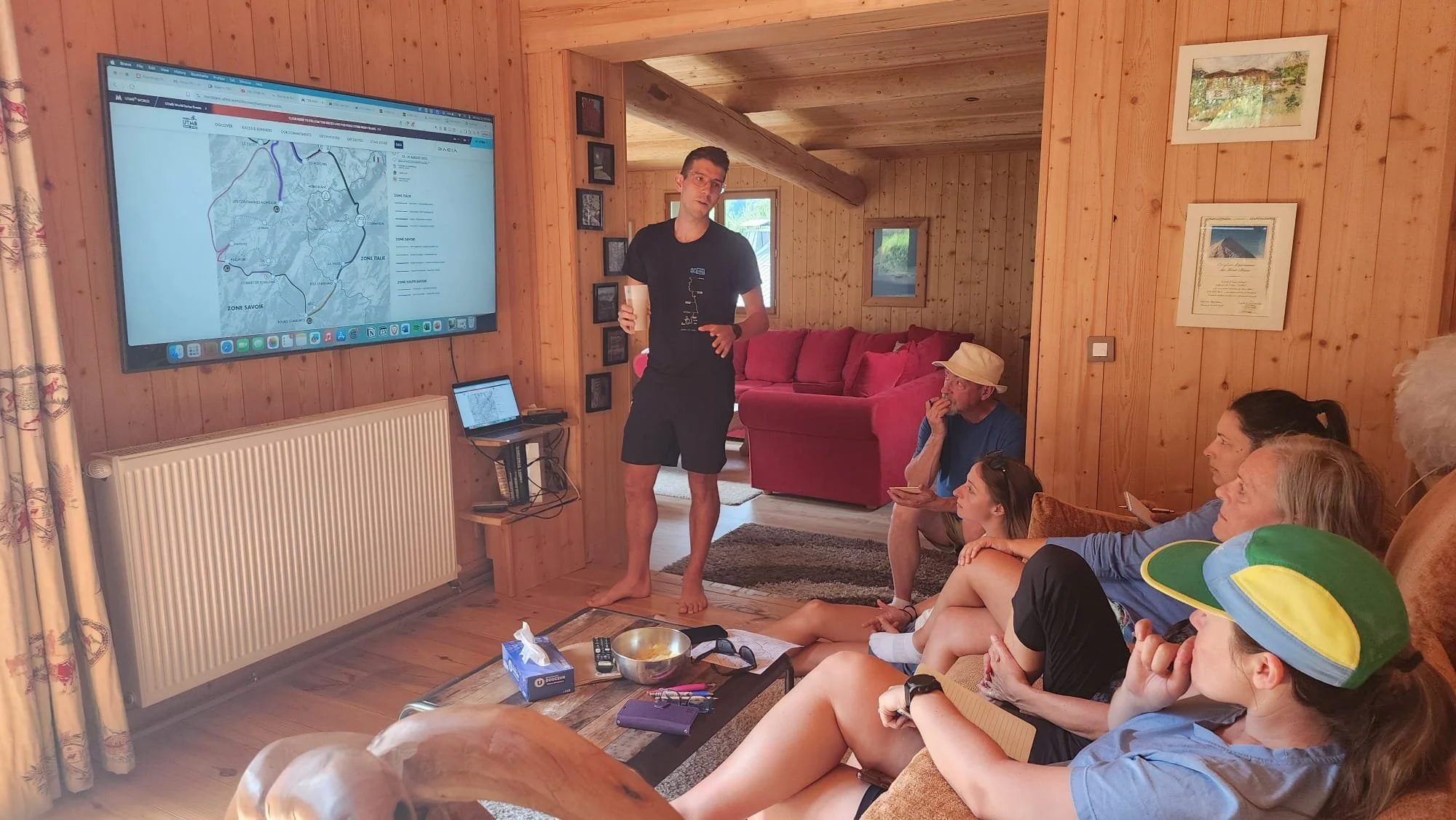
TDS crew planning meeting with Adam: talking about bus routes, race goals, and more!
Having never crewed Adam before, getting to know his preferences for cheering, communication, and encouragement was essential. His approach to running and racing does have some similarities to Kelsey, however, there are also some differences. While Kelsey is what most might say an anomaly in terms of finding joy, fun, and love of ultra-distance running (e.g., exclaiming ‘I love running’ throughout the race); Adam has more of a relatable approach to ultra-distance running (e.g., “this is really hard, why did I sign up for this?”). The preparation included Adam communicating to us what he’d like to hear and what usually doesn’t work for him, and what to expect from him during the race. We also discussed performance and process goals (e.g., how many calories he’d like to consume, interval times, use of poles, etc.) and practiced some aid station simulations and potential scenarios.
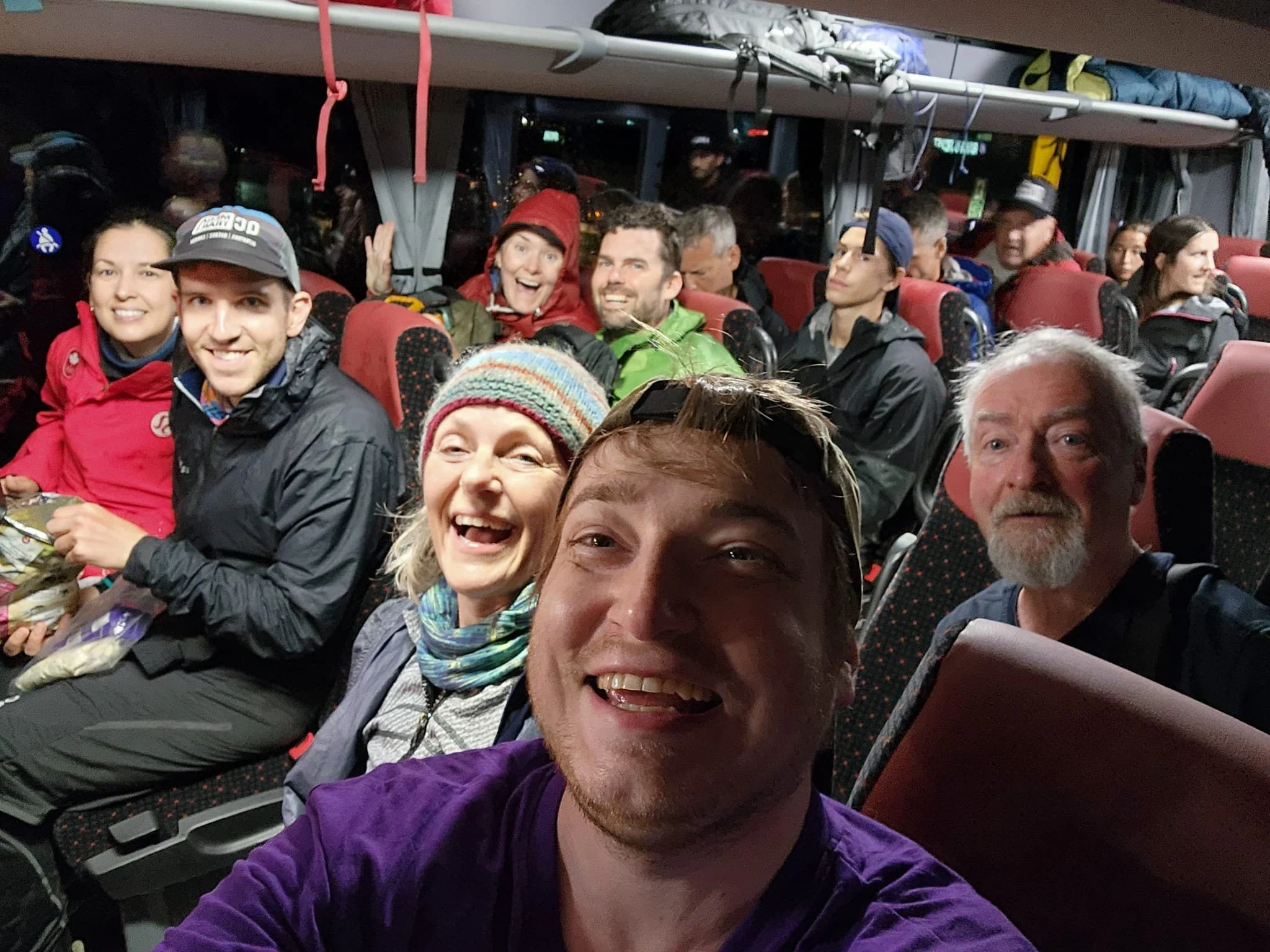
Monday morning, race day – even though it would be hours before we departed for the start line – was time for rest, last minute details and packing the crew bags. Shortly before 9pm, the whole crew made its way to the bus station in Chamonix where Kelli-Nicole, Steven, Adam and I would take the bus through the Mont Blanc tunnel to Italy for the start line. We said our ‘so-longs’ to the second crew team and boarded the bus with runners and crew members. What struck me about the bus ride – and to no surprise – was how quiet it was. The tension, nerves, quiet excitement from all the runners was palpable.
We reached Courmayeur around 10pm and had a bit of a walk to the start line. Crowds were starting to form, even a couple of hours before start time. Adam chose to get into the start corral early to get a good spot and we made our way a bit further down to get a good spot along the race route. The race started at 11:50pm and about a minute later, Adam ran by us and made his TDS debut. The start line was in a part of the town that was fairly elevated so when the end of the pack passed by, we could move to a different spot that looked over the cobble stoned streets below us to watch the almost 2000 runners make their way through Courmayeur and start the first ascent (close to a 1200m climb) of the race. The scene was amazing as you could see the pack of runners by their headlamps make their way up the first switchbacks of the mountain, up the ski hills and into the early hours of Tuesday morning. The lights twinkled and moved like a snake up the hill.
The first buses to bring support crews out of Courmayeur to the next aid stations on the course didn’t leave for another couple of hours, so we made our way to the Sport Centre to stay out of the cold night. We lined up with the rest of the crowd to board the bus to the first cheer station in Petit St. Bernard (36.5km) – a spot atop the skill hill where we would see Adam on course for the first time.
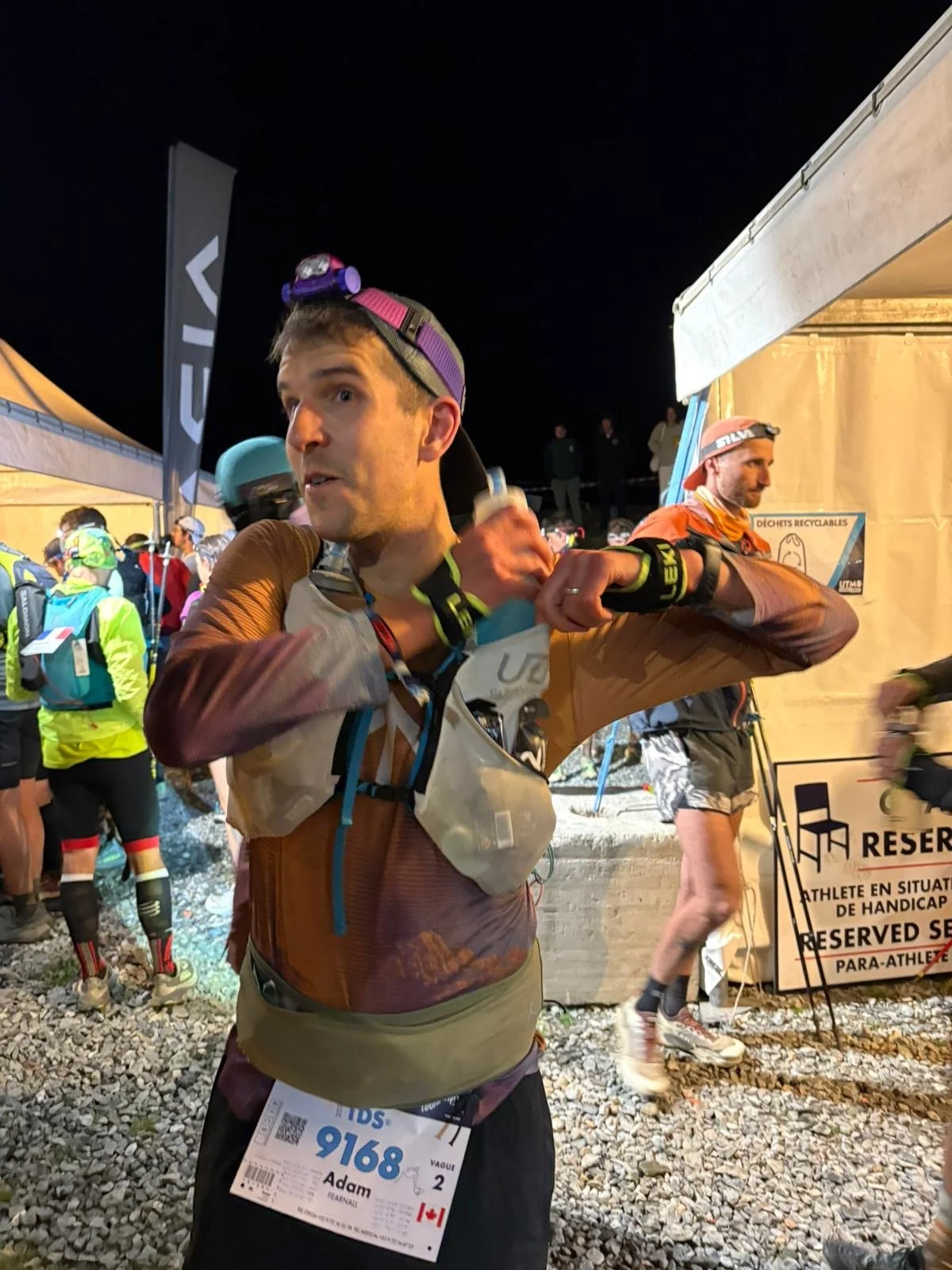
I’m not usually too affected by motion sickness if I keep my head up but taking a bus ride in the back row, in the dark, up more switchbacks than I can count wasn’t something I would call a pleasant experience. Thankfully when we arrived at the top of the mountain at the cheering spot, there was also a small café where we could stay warm, have a snack and lay our heads for a bit. When Adam’s tracker said he was about 15-20 minutes away, we made our way outside to wait to spot him coming into the tent to refill his bottles. He came in saying things were going well so far. The uncrewed aid stations are set up that you can get close to the runners and chat with them but can’t provide any assistance. So, when Adam was slightly struggling getting his bottles back into his vest, he looked at me and said, “it’s really killing you that you can’t help me with this right now isn’t it?” – boy was he right!
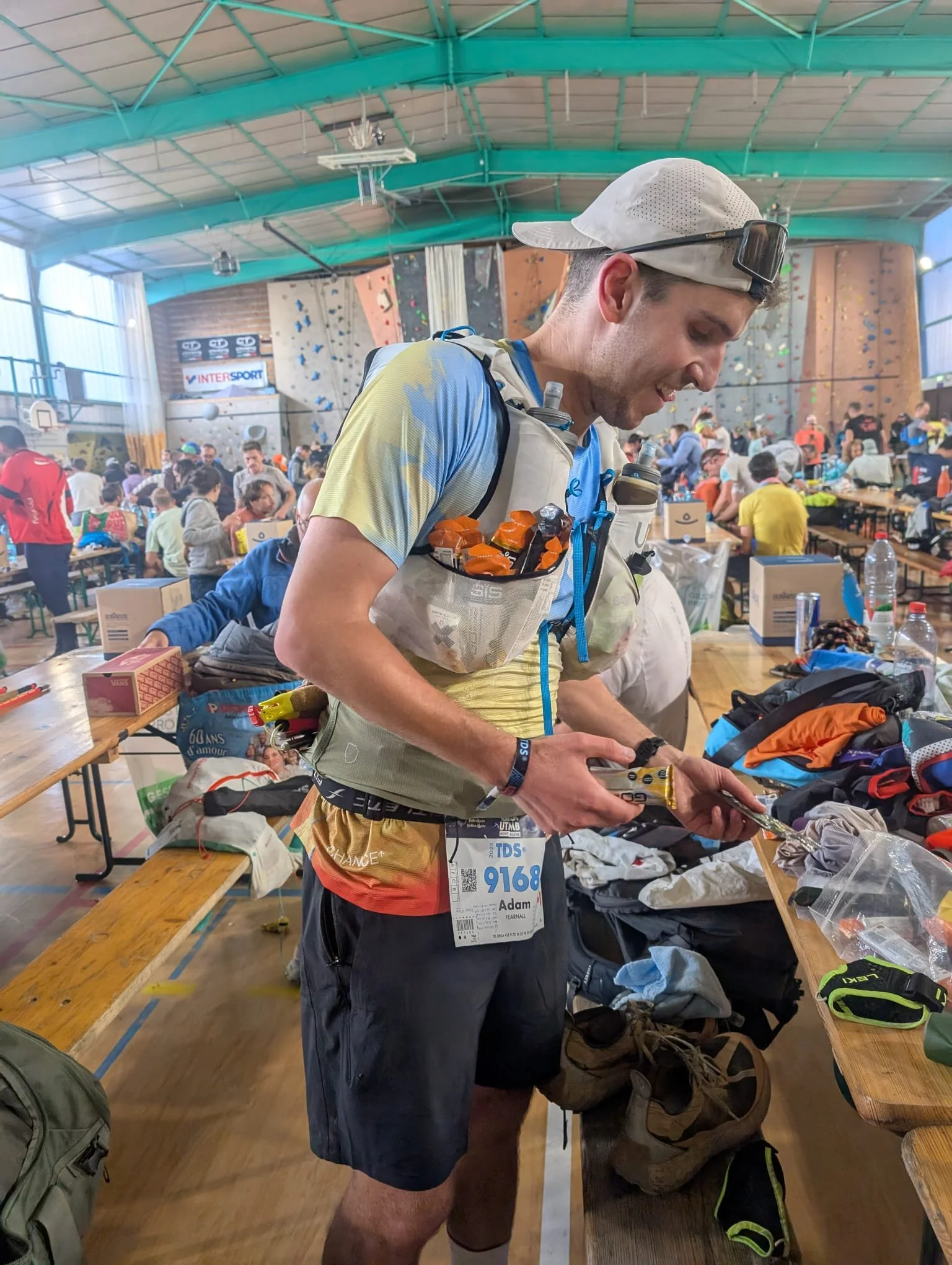
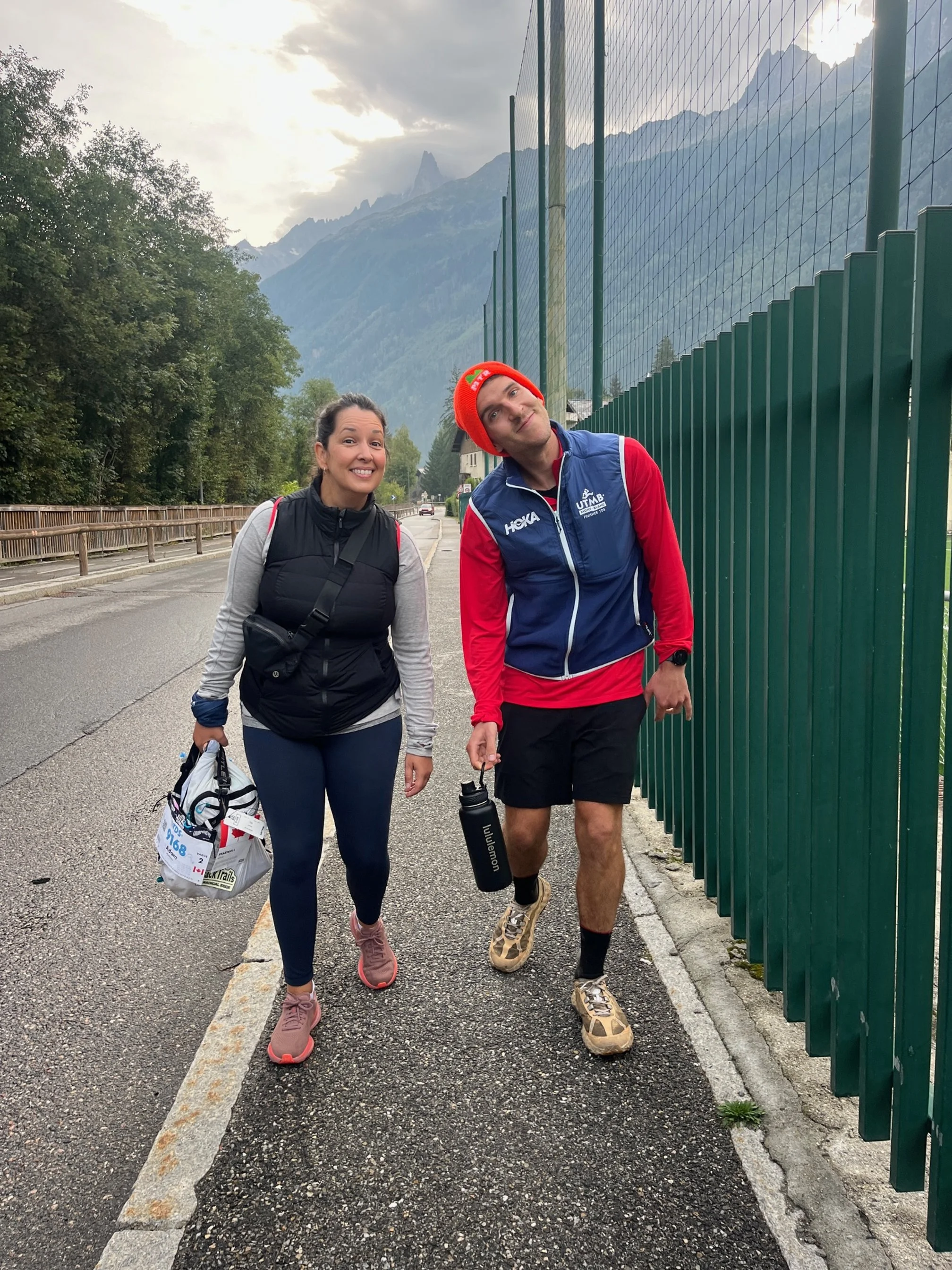
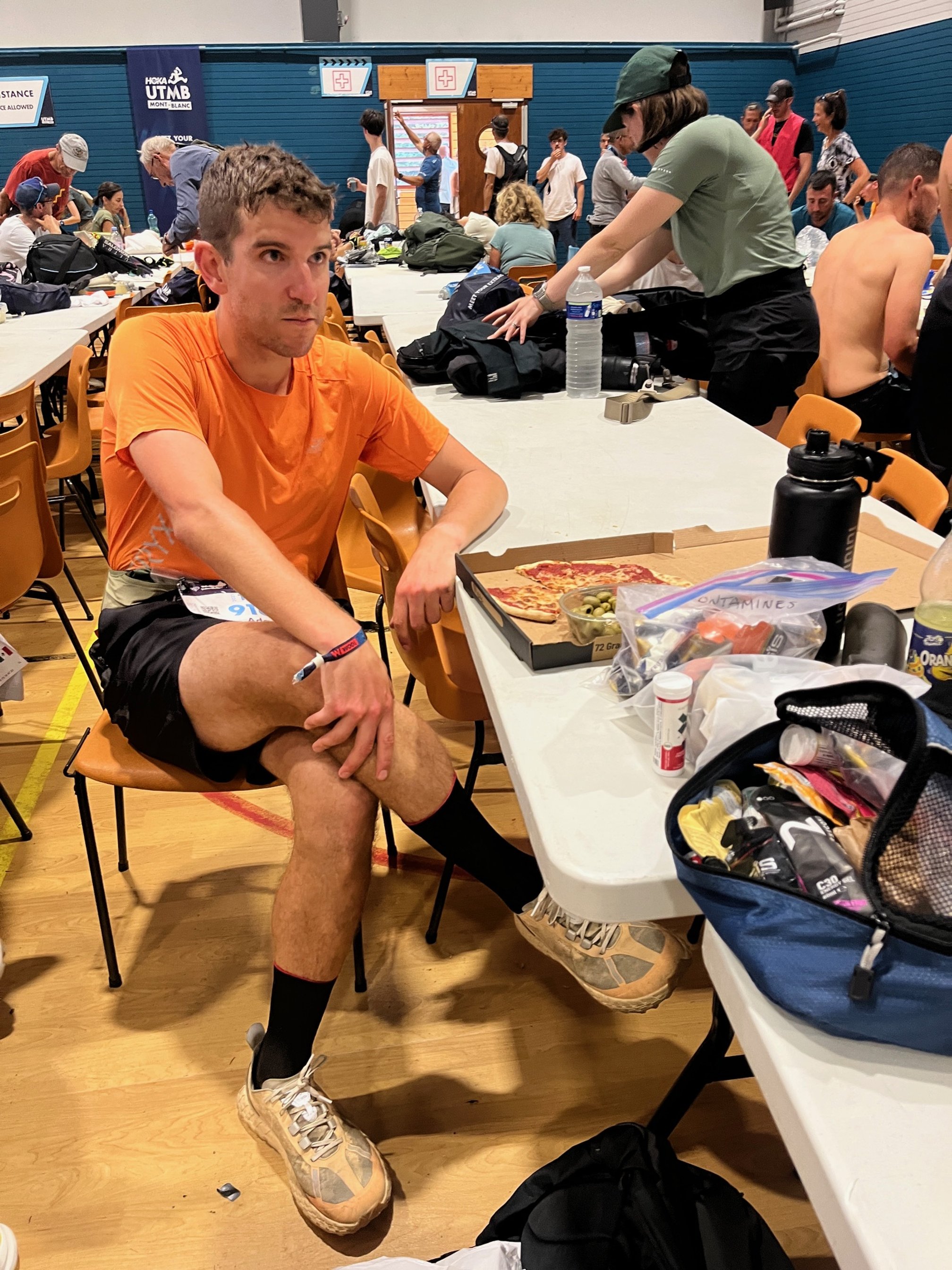
The next section was a descent on the other side of the mountain to the French town of Bourg St. Maurice (50.8km) at the first crewed aid station. Adam had picked Kelli-Nicole to be in the station with him at this point in the race. He would arrive at sunrise, and it would be the start of the toughest of the climbs. The bus to Bourg didn’t leave immediately after we saw Adam at the top of the mountain, and so we began to check the time, and hoped that Adam wouldn’t be TOO far ahead of his predicted time as the bus arrival was going to be tight! After a quick run back to the bus to retrieve a forgotten water bottle (oops!), we made our way down to the entrance of the aid station. Kelli-Nicole was able to enter right away, I placed myself at the exit of the aid station, and Steven made his way down the racecourse to run him in. Steven was still running out from the aid station when he met Adam, and he soon made his way into the station where he did a refueling, clothes and shoe change. And then off he went on what we dubbed, “a little hike up the mountain”.
Our next stop was a cheering spot at Cormet de Roselend (65.9km), at the top of this biggest climb – which meant we also had to do some climbing courtesy of a very skilled bus driver who maneuvered our minibus up some very scary switchbacks like a seasoned race car driver. We arrived and found a spot on the side of a hill where the runners would race by us just before heading into the uncrewed aid station and where we could get cell phone coverage. And so began the waiting… lots of waiting.
The runner tracking system for UTMB races is pretty reliable at registering runners’ times in and out of the race check points along the course. However, Adam had not registered into the previous time check point long after we had anticipated him doing so, and so some worrying for his wellbeing started. Thoughts of time chips not working versus Adam having a really rough go on the climb were going through our minds. The Apple AirTag we stuck in his vest wasn’t working so well because of the remote location and surrounding mountains so that didn’t give us any reassurance.
Then, all of a sudden, after hours of refreshing the live tracking website (and using up A LOT of phone battery), not only did the check in from the previous time point appear, but also the one from the current time check point! Adam had somehow run past us without us noticing and had already entered the refueling tent. We sent Steven running to the tent, while Kelli-Nicole and I packed up our bags on the side hill, hoping we hadn’t missed him completely! Thankfully, Adam was still refilling his bottles and grabbing some food when we all arrived at the tent exit.
Even though the time chip had missed him at the previous check point, he still struggled up that massive climb – Adam said that it was the hardest thing he had ever done and had been passed by about 80 or so runners on the climb. The fatigue and lack of sleep was also starting to show in his loopiness and slurred speech. He left Cormet de Roselend letting us know that he might be needing some extra help to get out of the next aid station – something we had discussed ahead of time and were prepared for.
On we went, on another bus to that next aid station – Beaufort (92.3km) – where we would be meeting and switching over with crew #2. Adam had asked me to take on the next aid station, so the pep talk preparation began on the bus – I already had made notes from our pre-race crew meeting. Beaufort was at about the 95km mark (ultramarathons are notorious for “small” discrepancies between published route markings and what is actually clocked by runners on the day of the race) and the biggest and busiest of the three aid stations. It was also the spot where most runners who bowed out ended up taking the bus back to Chamonix instead of continuing on foot. Because of his struggle up the last massive climb and his inability to consume as much calories and hydration as he had planned, the descent into Beaufort was also a challenge. Adam had texted Kelsey to try to problem solve some muscle pains, fueling, and fatigue challenges and was feeling a little less enthusiastic about the last 60kms of the course. In a dark mental space at this point, he had the wherewithal to request a change in crew plan so that Kelsey would be the one to be in the Beaufort aid station instead. I’m really proud of Adam for recognizing his needs to have his “running and life partner” to help him at this crucial point in the race. The whole crew – all 7 of us – were ready to receive him in Beaufort, also fulfilling his request for a pizza to gain some energy and consume some good carbs. We had also been in touch with his Registered Dietician, Melissa Allen, who was following along from Halifax in Canada, to offer some problem solving for the fueling and hydration challenges he was experiencing.
Having not been in the initial plan to crew an aid station, Kelsey and I sat down and reviewed my crewing notes for Adam at Beaufort, and we set forth a plan for her to support Adam. Throughout their racing experience, Kelsey had not really crewed Adam directly at this type of large event as she was usually also out on the racecourse as a participant. So unsurprisingly, she was a bit nervous and anxious on what exactly she would need to do and say when Adam arrived. My role switched to “crewing the crew” to help her settle her nerves and build some confidence in her ability and “Adam expertise”.
Adam arrived at the Beaufort aid station in a more positive mood and physical state than we had anticipated – he had made some adjustments to some electrolytes and fueling since his texts and was feeling better. While the pep talks were still helpful, it didn’t seem like we would need to be engaging in some serious negotiating to get him to the finish line after all. As Kelsey and I had planned, I stayed in a spot close to their table in the crew area in case she needed some backup, but we soon recognized that Adam just needed a bit of a reset, some good pizza, and support from Kelsey. After about a half hour, Adam was ready to prepare to head out again. After a successful washroom pitstop (we’ll let you decide what that might mean!), he was ready to get his vest back on, have a final bite of pizza, and head off again to conquer the final 60kms of the race into the second night.
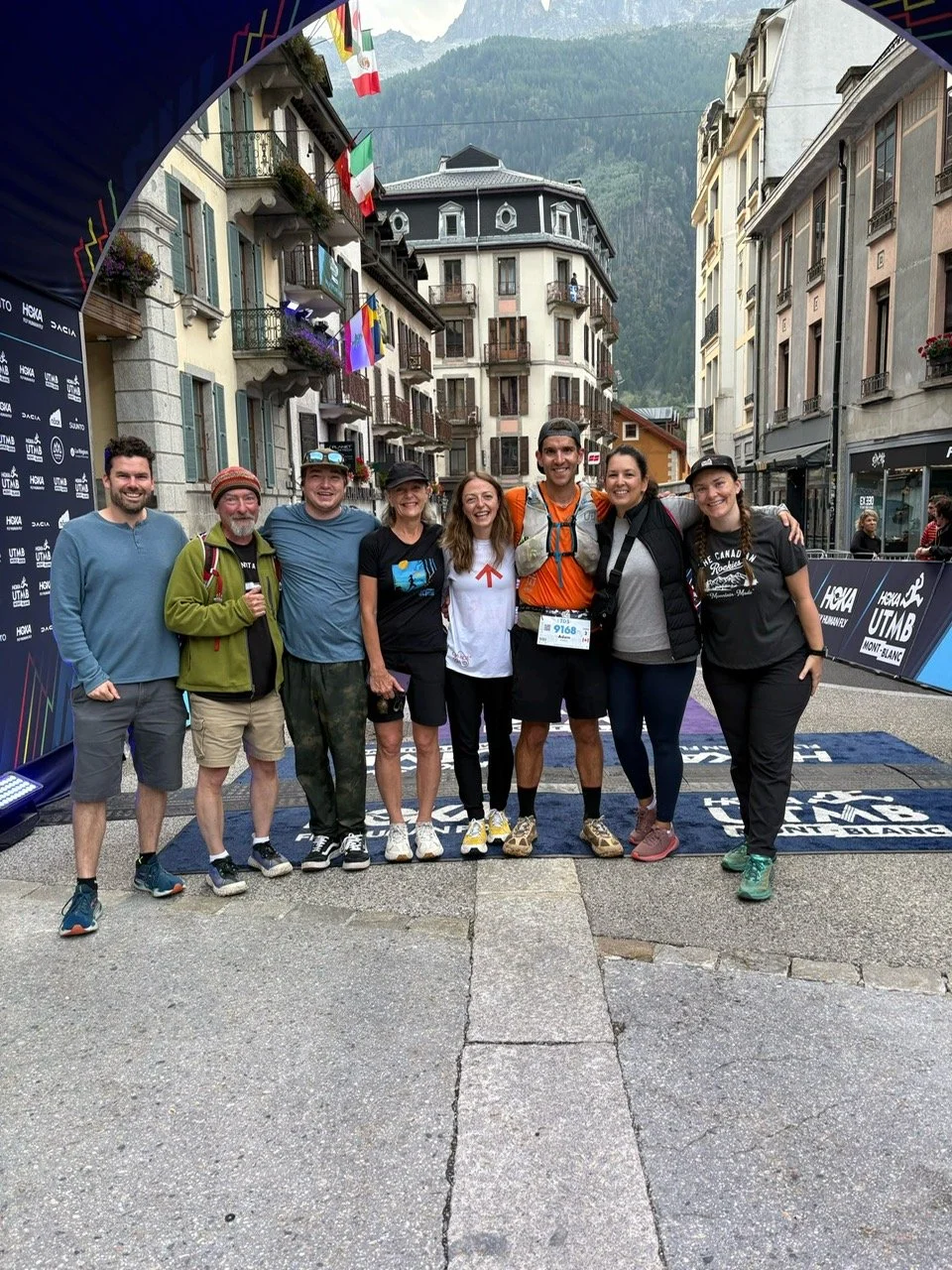
At the finish of TDS with our runner! Finish time: 32:04:53 / 313th overall
This was our cue to head back to Chamonix and get some rest – Adam being left in the exceptional hands of Noel, Jane, and Riley. After a long bus ride back to Chamonix, we arrived at our chalet and were in bed by 11pm. After Beaufort, Adam seemed to get a second wind and started gaining on several runners, passing about 80 runners before the next crewed aid station at Les Contamines at the 125km mark. He also joined up with a newly introduced running friend, Craig and they would run the remaining of the race together, encouraging each other until the finish line. In our pre-race meetings, Adam had set himself a goal to run the final 8kms – mostly flat road conditions – in under and hour. At the time, it seemed like a pretty lofty goal, but his pace coming into that final check point before the finish line suggested that he could reach that goal. Another major goal was to “beat his ghost time”. His ghost time was the estimated time the UTMB algorithm gave him based on his pace from other races. In fact, one of our race mantras had become “F*** the ghost!”. And Adam was well within his goal time to in fact, F*** the ghost (by over 2 hours).
Our plan was to get up and make our way to the finish line for around 8-8:30am, but we quickly realized that he may very well be arriving before 8am. Crew team 2 had only arrived at the chalet well past 3am, so they were on limited rest, but we speed walked our way from the chalet to the finish line where we all greeted Adam at 7:56am, watching him dance underneath the big UTMB finish line arch in a finish time of just over 32 hours, racing the last 8km leg in 56 minutes.
Earlier in the week, I had mentioned to both Kelsey and Adam that they would benefit from more openly accepting help, even when they didn’t think they needed it. This phenomenon is ever so amplified, for both of them, at the end of a race, when they say things like: “I can carry my vest”, or “I can walk back to the chalet”. And then I respond by saying things like, “oh I don’t mind carrying your vest”, or “of course you can, but it may be a better idea if we take the train”. So off we went, to the train station, to get Adam (and the rest of us) back to the chalet to shower, eat, rest, and recover. I honestly can’t remember much of what else we did the rest of the day. I do remember looking outside in the afternoon at the torrential downpour and being very grateful that Adam had finished early in the morning. And soon we would be shifting gears again and preparing for race #2: UTMB.
Kelsey’s 3rd UTMB
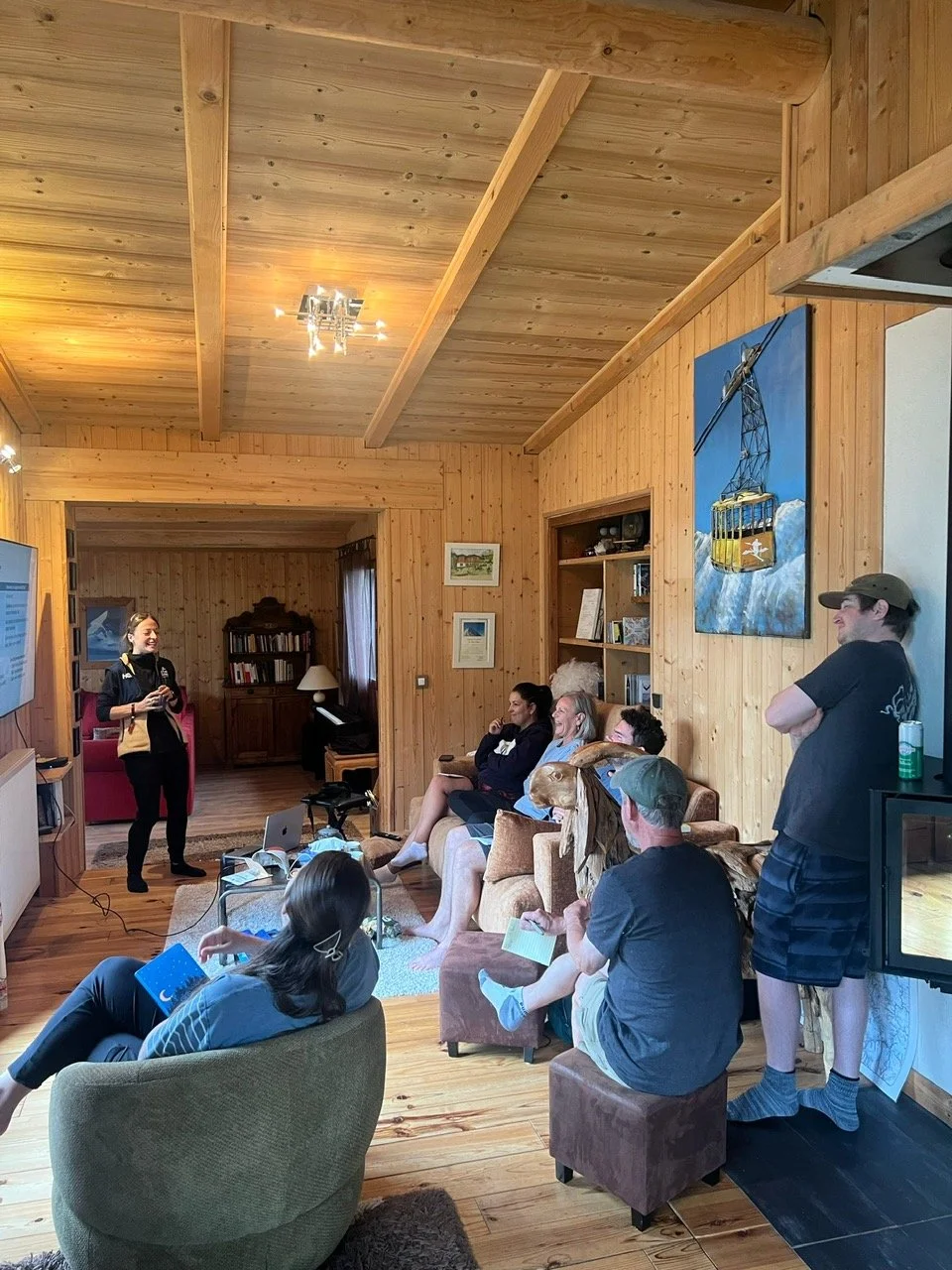
Kelsey leading the crew through her UTMB race plan
Once relatively well rested after a good night’s sleep Wednesday evening, Thursday turned immediately back to logistics, simulations, crew meetings, and more race preparations. Since some of us (myself, Adam, Noel, and Jane) had crewed Kelsey at UTMB before, we were more familiar with the bus routes, aid station locations, and Kelsey’s needs. However, with slightly different goals this year, it was still very important to go over all of Kelsey’s needs and preferences and discuss crew strategy prior to the start of the race. Having finished 25th woman last year, Kelsey felt confident in her ability to beat her time and her placement in this year’s race. And her confidence was noticeable in the days leading into the race. Perhaps the distraction of crewing Adam earlier in the week was helpful, and the increased course familiarity and knowledge of her own capabilities helped provide a more excited versus anxious perspective. Adam and I kept noting our observations as to how much calmer Kelsey was and how much we looked forward in seeing how that confidence manifested itself during the race. Kelsey had spent the previous year working hard on her fueling and nutrition for the race – she struggled with keeping food down in the first half of the race last year – as well as her speed for the “flatter and smoother” sections of the race. Having now two UTMBs under her belt, Kelsey had a better idea of how much she could push in the first half of the race and still have the energy for the second half.
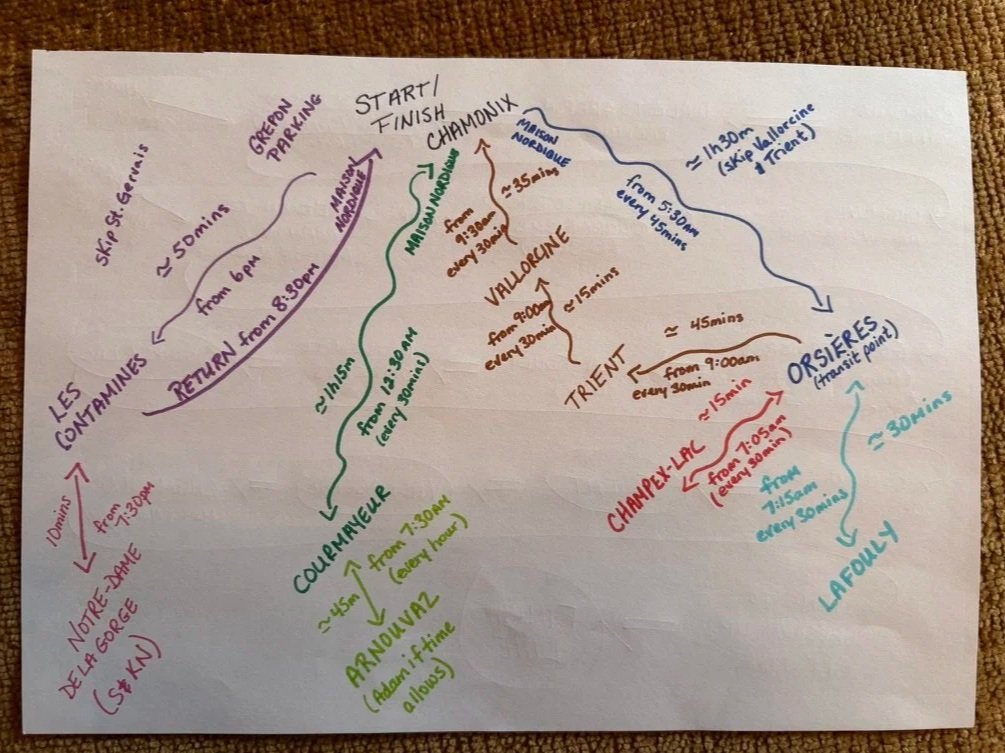
The mobility plan for Kelsey’s crew at UTMB
Friday rolled along – race start time at 5:45pm – and a few of us took the opportunity to go out and explore a bit given the sunny morning weather. We made our way up to the top of a ski hill just outside of Chamonix – via gondola – where Kelsey would make her final ascent – via foot – before descending into Chamonix and the finish line the following evening. The afternoon consisted of crew bag packing, last minute logistics, and final crew strategy meetings. Kelsey’s “A” goal was top 10 women, along with many other process and performance goals. Much like Adam’s race earlier in the week, the weather forecast was nothing short of challenging. While last year’s race could be described as hot (daytime) and dry, this year’s race was forecasted to be wet, cold, muddy, and snow stormy, particularly throughout the first evening at some of the highest altitudes and over the course of the longest distance between crewed aid stations. Having grown up and trained in western Newfoundland, these conditions didn’t really deter Kelsey, and we even thought it could work to her advantage since she had experience adapting to changing weather conditions. But I’m not sure any of us could have truly prepared for what was to come that evening.
Late afternoon meant it was time to make our way to the start line. Having “elite” status meant that Kelsey could arrive later than others to the start line and get a decent spot not too far from underneath the start/finish line arch. What we didn’t consider however were the crowds already lining up on this side of the racecourse, which made getting there a bit trickier than anticipated, and we had to leave Kelsey a bit earlier than planned so that she could take a runners-only shortcut to her start corral. Hugs and final encouragements were exchanged and then we took our spots a little further down the course to position ourselves to get to the very first buses to the next crew station. Adam – who was much spryer than I would have ever anticipated- made his way to Les Houches, the first uncrewed aid station at about 10km on the course. Noel, Jane, Riley, and I made our way directly to the first crewed aid station spot 30km into the race, Les Contamines. Kelli-Nicole and Steven continued a little way further to the last cheering spot before the evening climb up the mountains. The first downpour happened well before the first crewed aid station, and contemplations for equipment for the rest of the night were being formed. Unfortunately, in an attempt to make that first aid station stop efficient, we had decided to only take partial crew bag contents into the tent with Kelsey’s brother Riley. I definitely kicked myself when Kelsey requested a rain jacket switch and Riley didn’t have one for her. The aid station in Les Contamines is pure and utter chaos. It’s not very big, and the pack of runners has yet to spread out very much, so Kelsey arrived at the tent shortly before Riley was allowed in by the race security. They quickly met up, swapped her empty bottles for full ones and restocked her vest with gels, and off Kelsey went into the dark, cold, wet night. She ran those first 30 kilometres much faster than previous years and was in 20th spot (women) leaving the aid station. Kelsey also informed us that she had a nasty fall about 10 steps past the start line and was nearly trampled but came out with just a few knee scrapes and a bit of a fat lip. After receiving a very enthusiastic pep talk by Steve and Kelli-Nicole (something like “YOU EAT HILLS FOR BREAKFAST”) at the next cheering station, we all made our way back to Chamonix to wait for the next bus route into Italy.
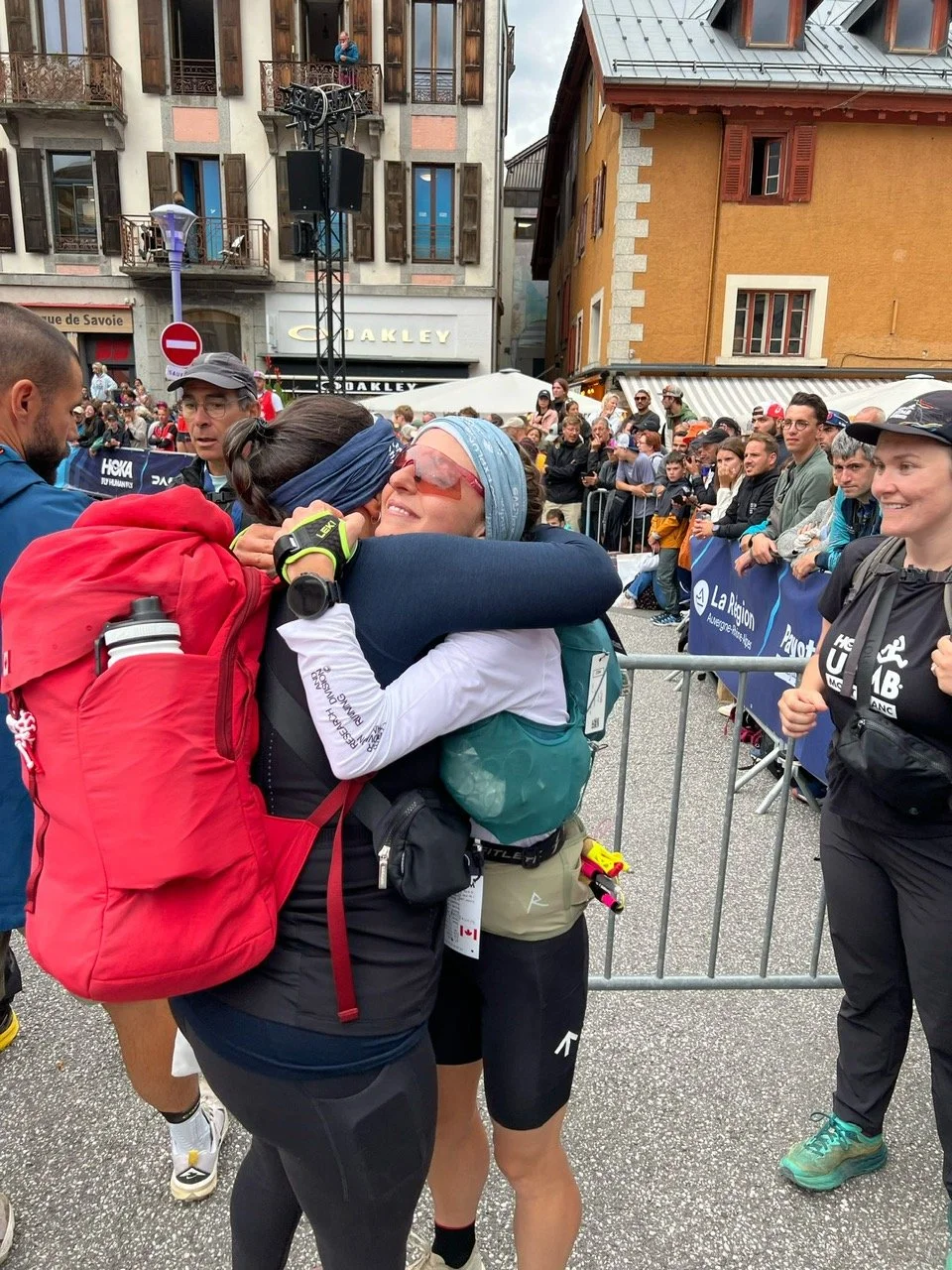
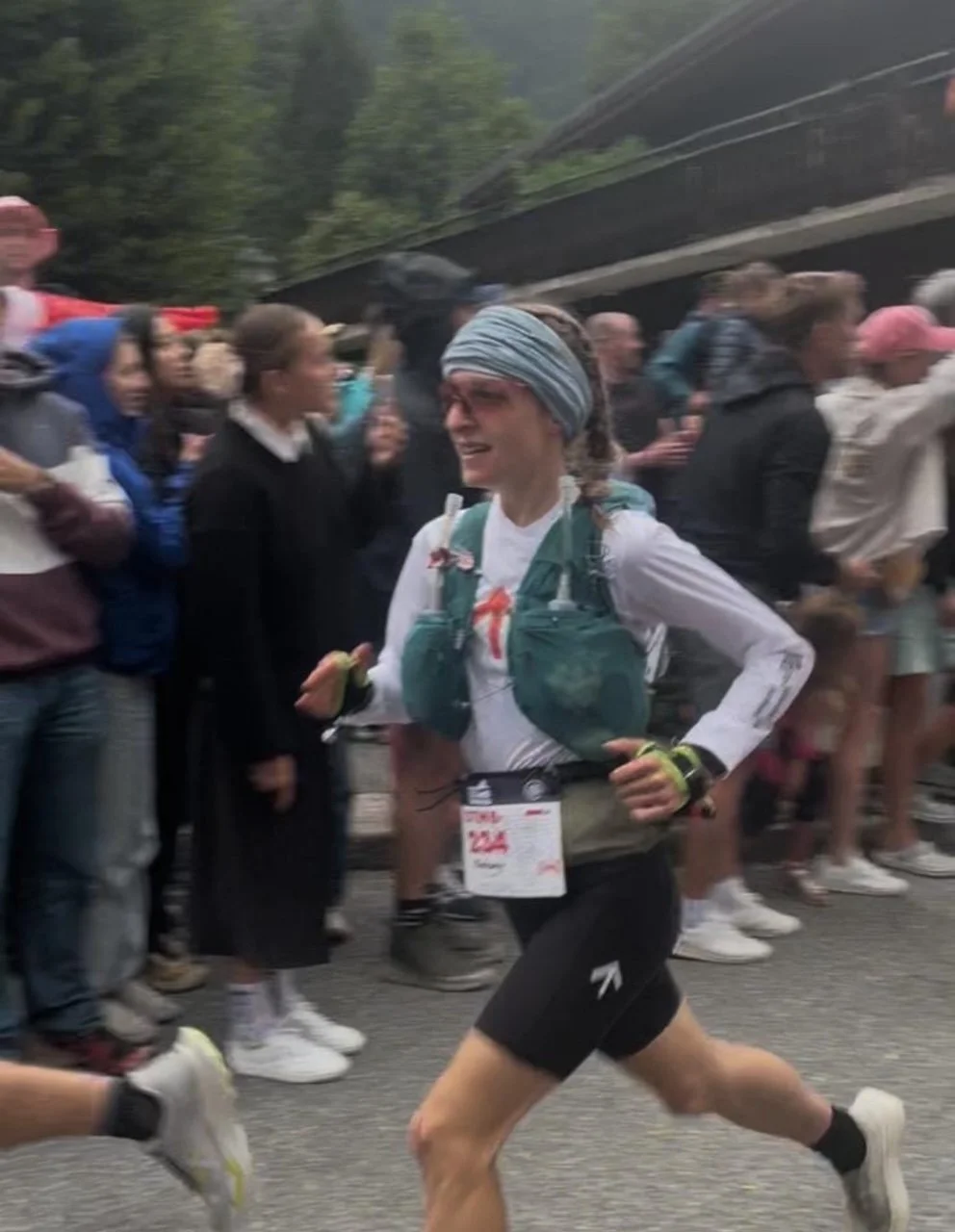
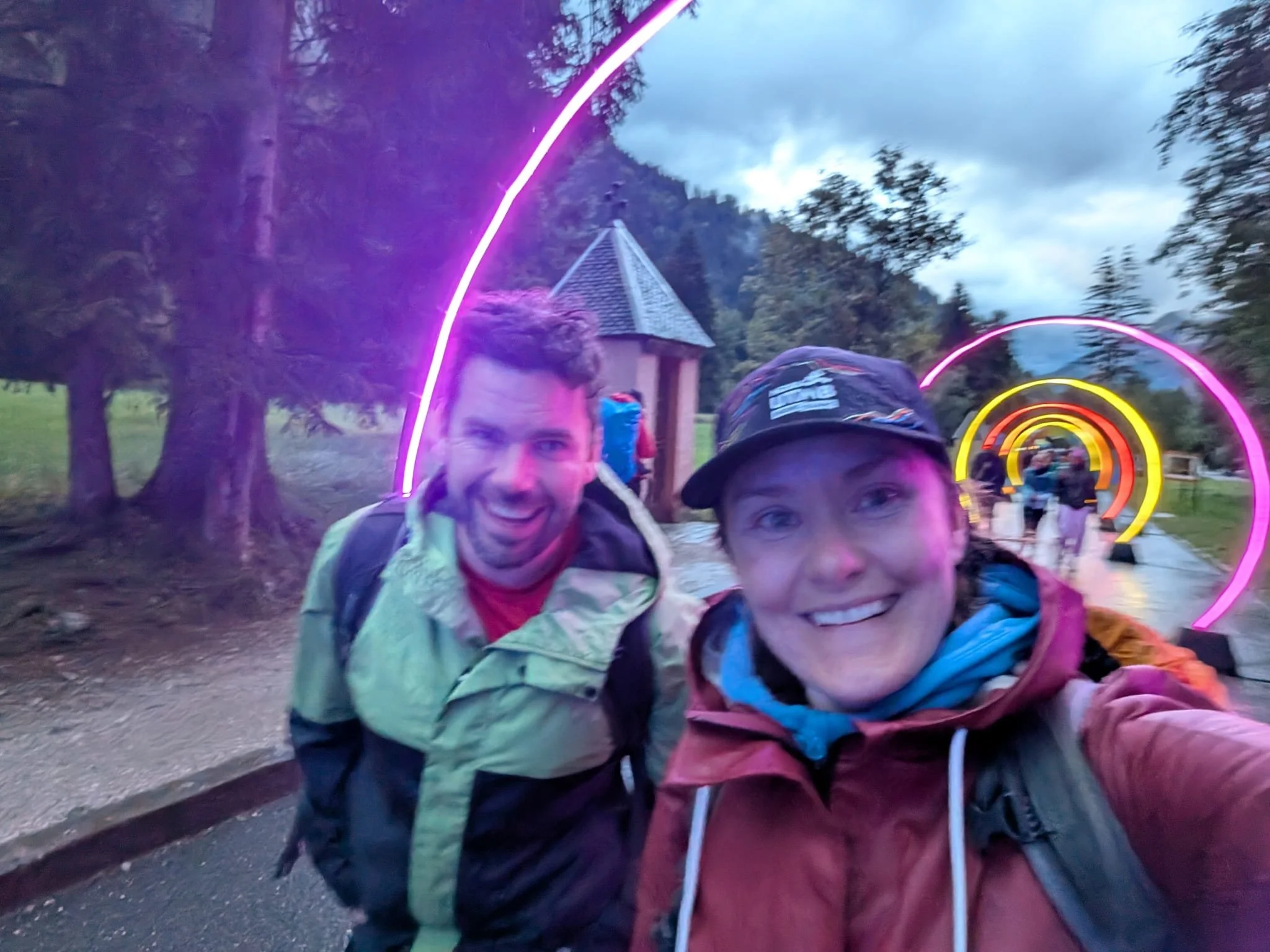
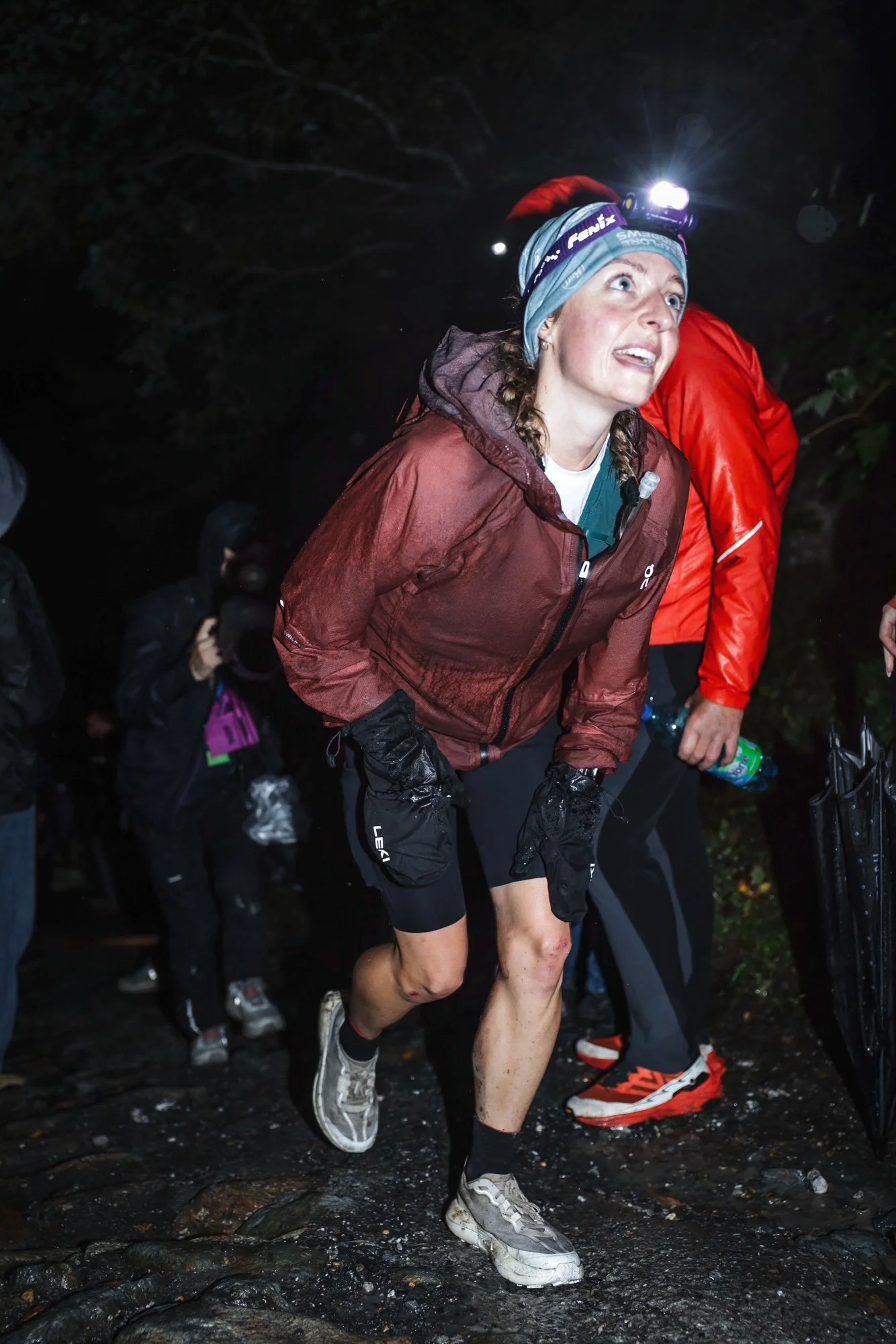
The rain was coming down very hard in the Chamonix valley, which would only mean it would likely be snow in the mountains. Riley, Noel, Jane, and I waited under cover to take the first bus to Courmayeur, Italy to meet Kelsey at the next crewed aid station in the early hours of Saturday morning. Adam, Kelli-Nicole and Steven headed back to the chalet for a bit of rest. Adam would join us a bit later in Italy, and Kelli-Nicole and Steven would meet us in Switzerland for the remaining cheering and aid stations. As soon as we started to get settled in our spot inside the sport centre in Courmayeur to try to get some sleep before Kelsey’s 5-5:30am anticipated arrival, we received a notification that due to dangerous weather, the racecourse route was being changed, and we could anticipate runners arriving faster than originally scheduled. Between the change in schedule, the weather reports, and the consistent text notifications, any chance of getting some sleep went out the window. We had set goals to limit the crew station times to under 8 minutes each, however the weather and probable need for equipment and clothing changes meant another change in plans. Courmayeur was the aid station Kelsey chose for me to assist. Being at about the halfway mark and at the end of the longest stretch without assistance, it’s often the station where runners spend the most time and a spot where many drop out of the race.
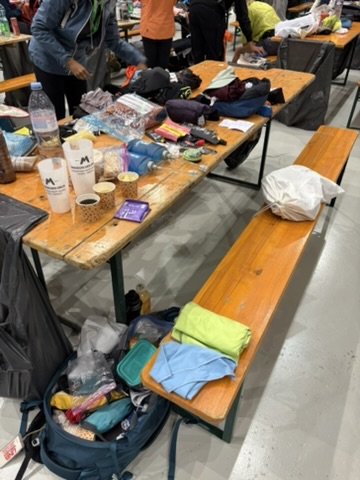
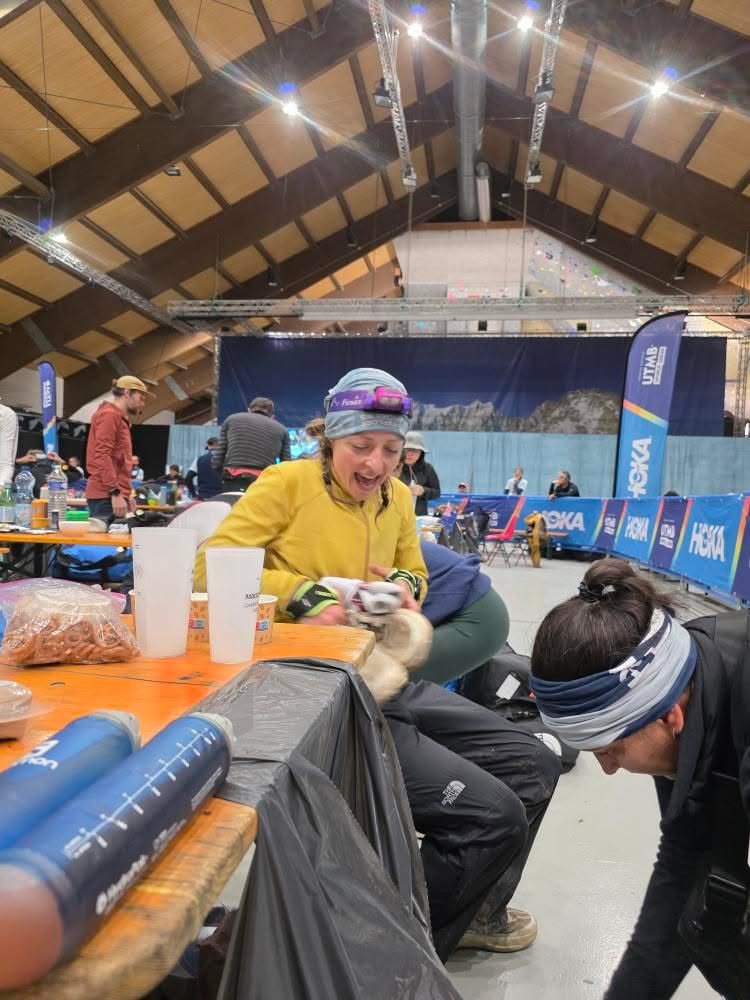
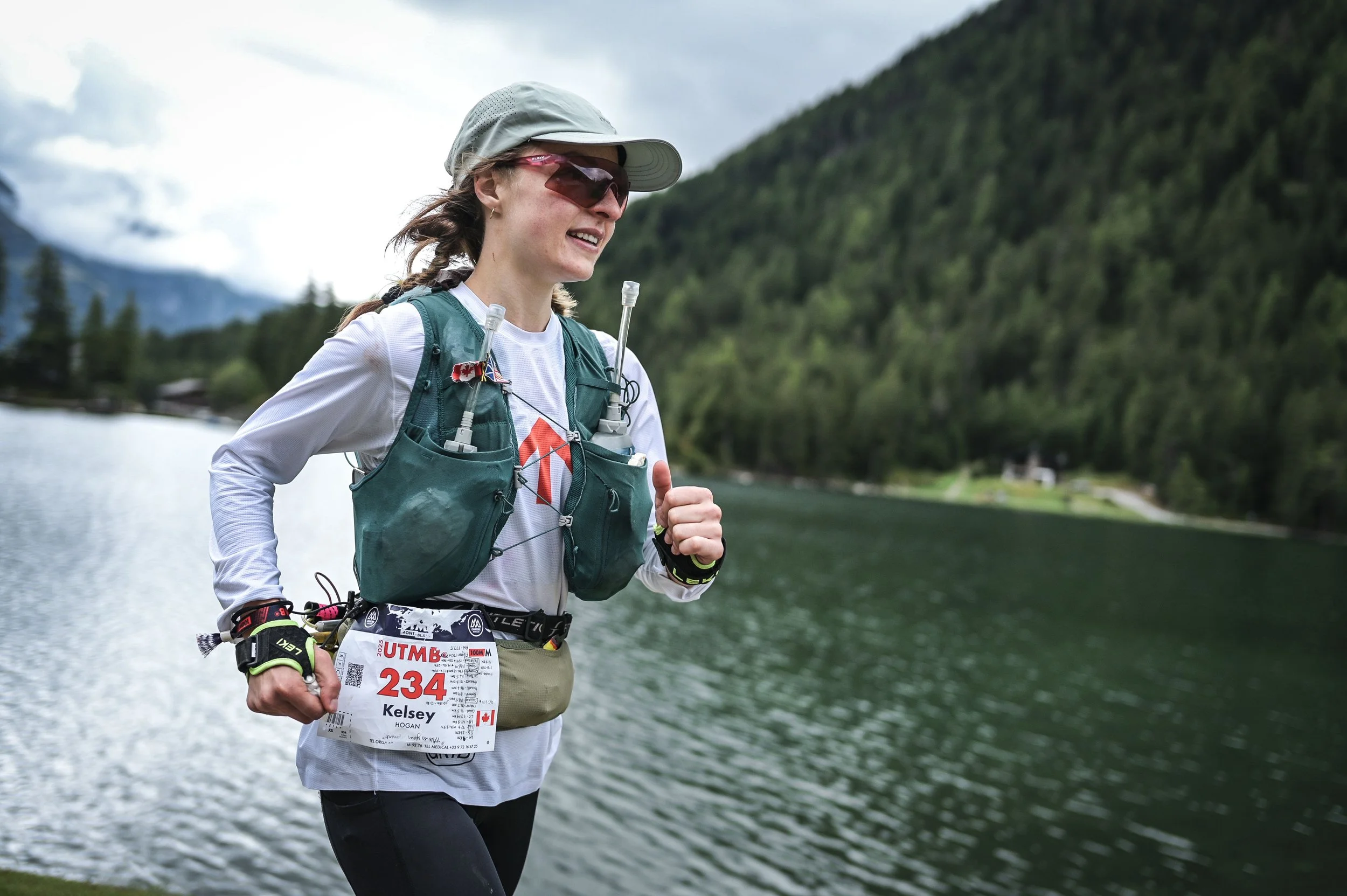
Thankfully, I was allowed into the station earlier than the typical 10 minutes buffer before a runner’s anticipated arrival time. The aid station wasn’t too busy, partly because Kelsey was further ahead in the race than previous years, and because runners were experiencing incredibly challenging conditions overnight that delayed many runners from their planned arrival times. Due to the poor weather, Kelsey’s GPS tracker wasn’t working in the mountains, but she was progressing steadily along according to the time check points and was still comfortably ahead of her time from 2024. While some runners were clearly spending time stopped in warming stations in the mountains, Kelsey plugged along the route and arrived in Courmayeur shortly before 4:30am. Kelsey’s first words to me coming into the sport centre were, “that was the hardest night of my life”. I had had the time to lay out all of Kelsey’s fuel, change of clothes, shoes, towels, hot coffee, etc., so we were well prepared to execute that aid station as efficiently as possible. While she had endured a rough night in the mountains, Kelsey was clearly in better condition – physically and mentally – than most of the runners arriving slightly before and after her. After a clothing change, refilling her food, hydration, and replacing her emergency blanket (she arrived with her original one wrapped around her underneath her jacket!), Kelsey was off once again passing over a dozen runners through the aid station, where we ended up taking just under 13 minutes. The consequences of being faster this year was that she would be starting the next climb still in the darkness, and that we wouldn’t be able to make it to the next cheering point in Italy in time – good challenges to have to overcome! As she left Courmayeur, running past the rest of the crew, she exclaimed, “I feel like a new human!”, and off we boarded the next bus, back to Chamonix to now tackle the Switzerland side. Kelsey was well inside the top 20 with the next runners in reach.
The poor weather continued through the morning until about 9am, and we met Kelsey at La Fouly shortly after 10am. At this point in the race (115kms), the runners really start to spread out and chasing down runners ahead of you starts getting a bit more challenging. While Kelsey had climbed into the top 15 at this point, the top 10 women were also progressing at a steady pace. In comparison to last year where she gained energy and strength in the second half after finally being able to keep food down, Kelsey seemed to be losing a bit of steam, particularly on the downhills. Arriving at the next crewed aid station in Champex-Lac (128km), where Adam was tasked with crew duties, Kelsey was still looking much better than many of the other runners coming in with her – even the volunteers at the tent exit with whom we were chatting were commenting on how “peppy” she looked. Yes – Kelsey still manages to seem peppy after 18.5 hours of racing through the Alps! She was now in 13th spot for the women – the next bit, with a big climb (most sections had big climbs!), would give us a more accurate indication of what the last 50kms of the race might look like.
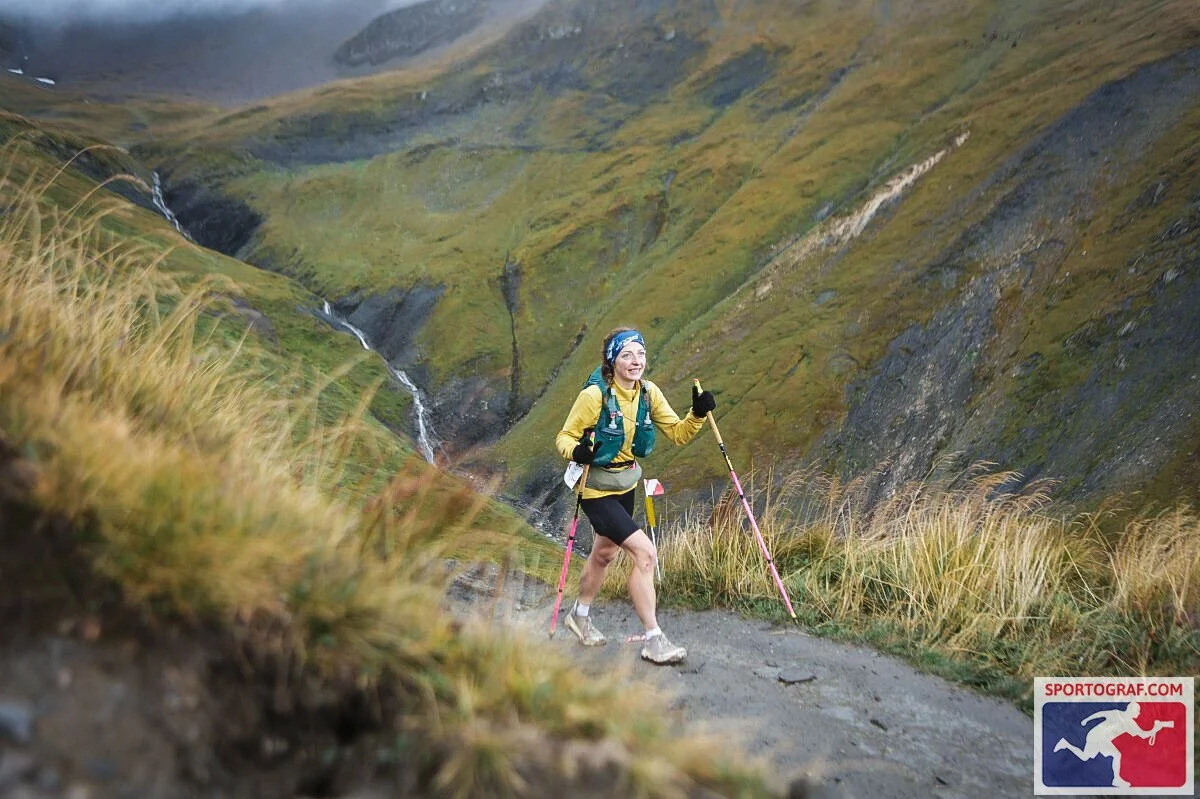
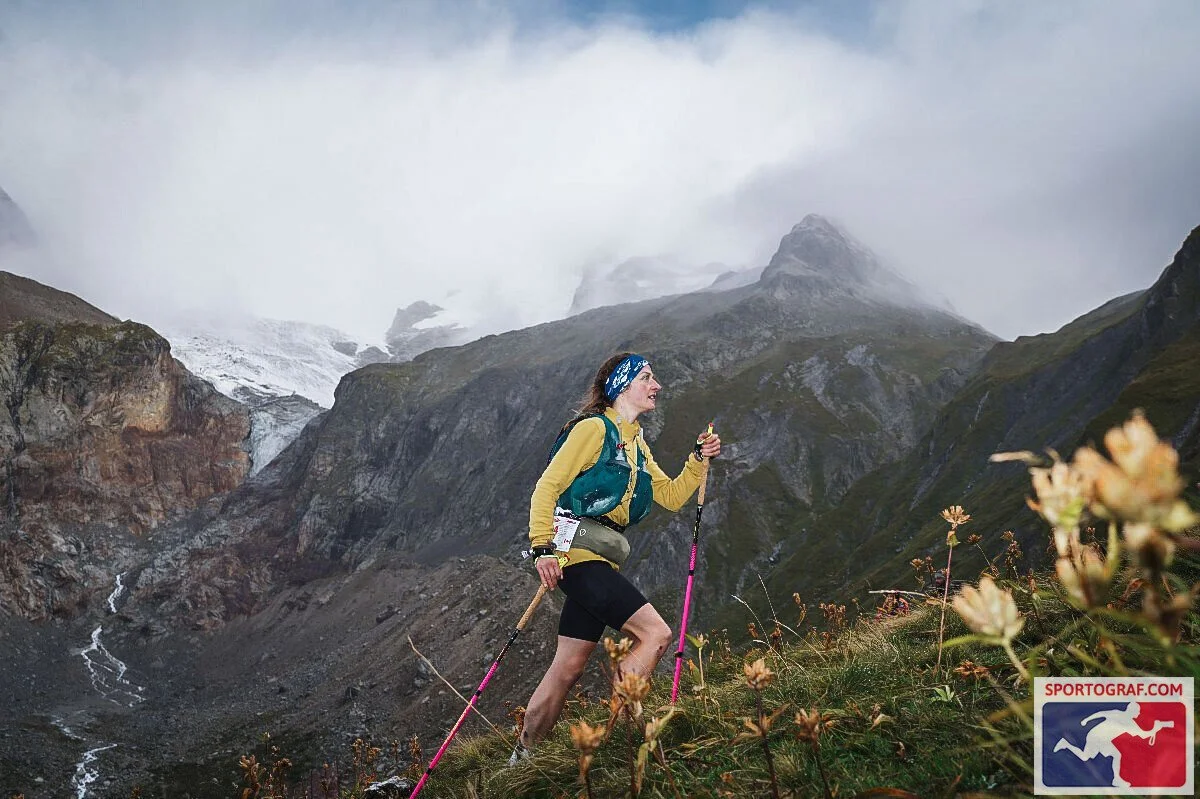
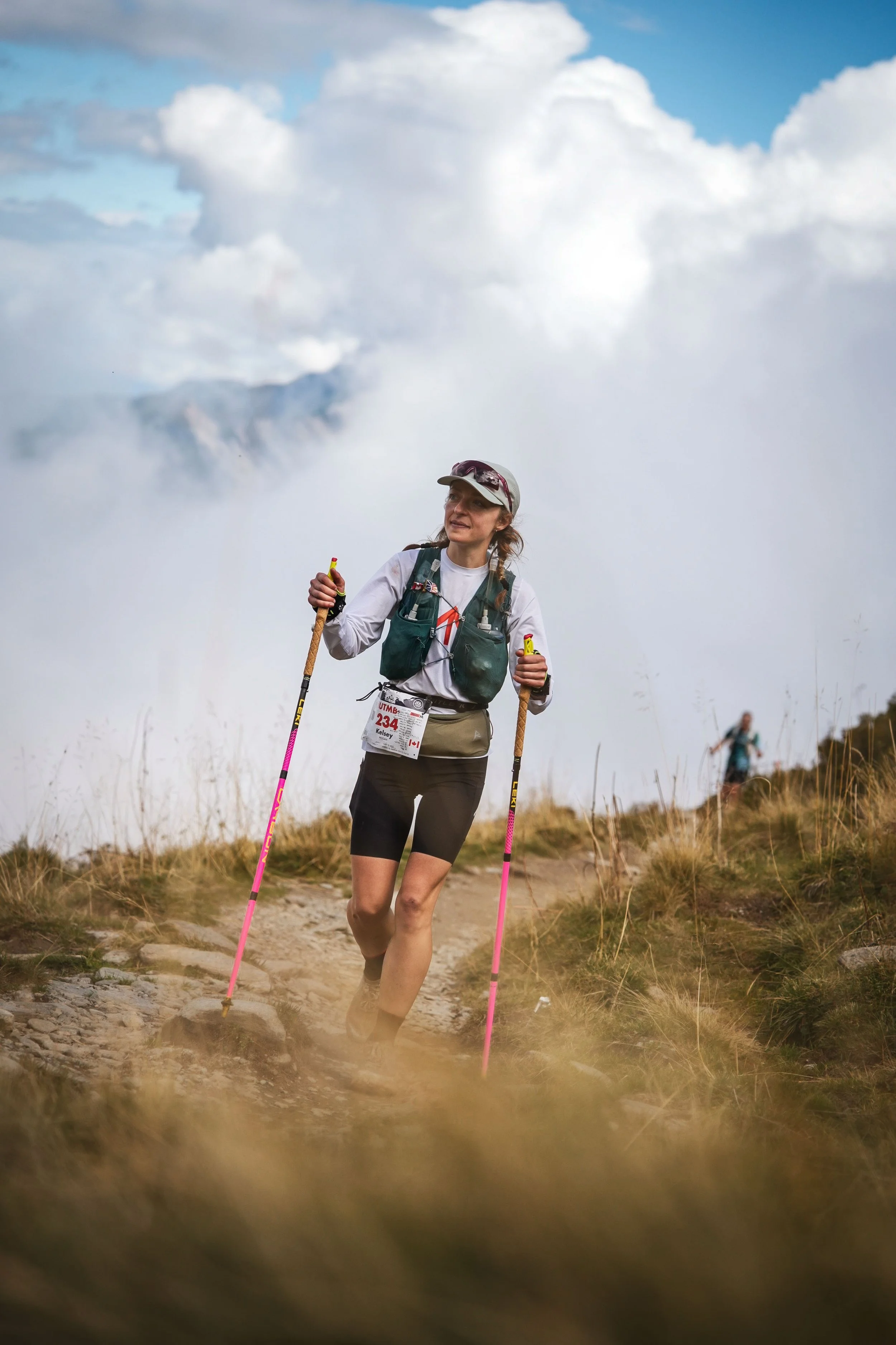
Off we went once again onto the bus, zigging and zagging down and then up mountain highways to the next aid station in Trient (145km). Kelsey’s mom was tagged in for this aid station – the spot in the race where Kelsey really starts to feel loopy. Evidence of that this year was her insistence that she needed sunscreen starting at 5pm or that it would be a good idea to grab some samples of runner’s lubricant to try later. Kelsey also came into the Trient aid station a little rougher for wear than we had seen her. Her usual optimistic and joyful energy had been replaced with a more subdued and sad energy. The legs she had at this point in the race last year had not manifested themselves this time around and she was struggling not only with her leg fatigue but also the negative head space she had found herself for the last bit.
In our pre-race preparation, Kelsey had made it clear that whether she was racing well or not, it was going to be tough (clearly) but also said that she wanted to be pushed. My role was to help push her. So, when she kept delaying her exit from the Trient aid station and seemed a little less than enthusiastic to get back on course, I took that instruction to heart and looked her in the eyes and told her – in so many words – to get going and get going now. It’s interesting to reflect upon this moment because at the time, when the competitive juices are flowing, pushing Kelsey was not difficult. But as I type this out now, I feel myself getting quite emotional at the thought of it all. I can see Kelsey’s sad expression looking back at me, as to say, “this is really hard”. And soon after she made her way back into the mountains, Adam and I had a quick debrief about how she was not feeling great and engaging in a bit (a lot) of a pity party. I started to question my intensity at that moment – even though Adam reassured me she was fine. And he and I quickly came up with a plan on the drive to the next (and last) aid station in the event she was still sulking and needed an extra push for the final section.
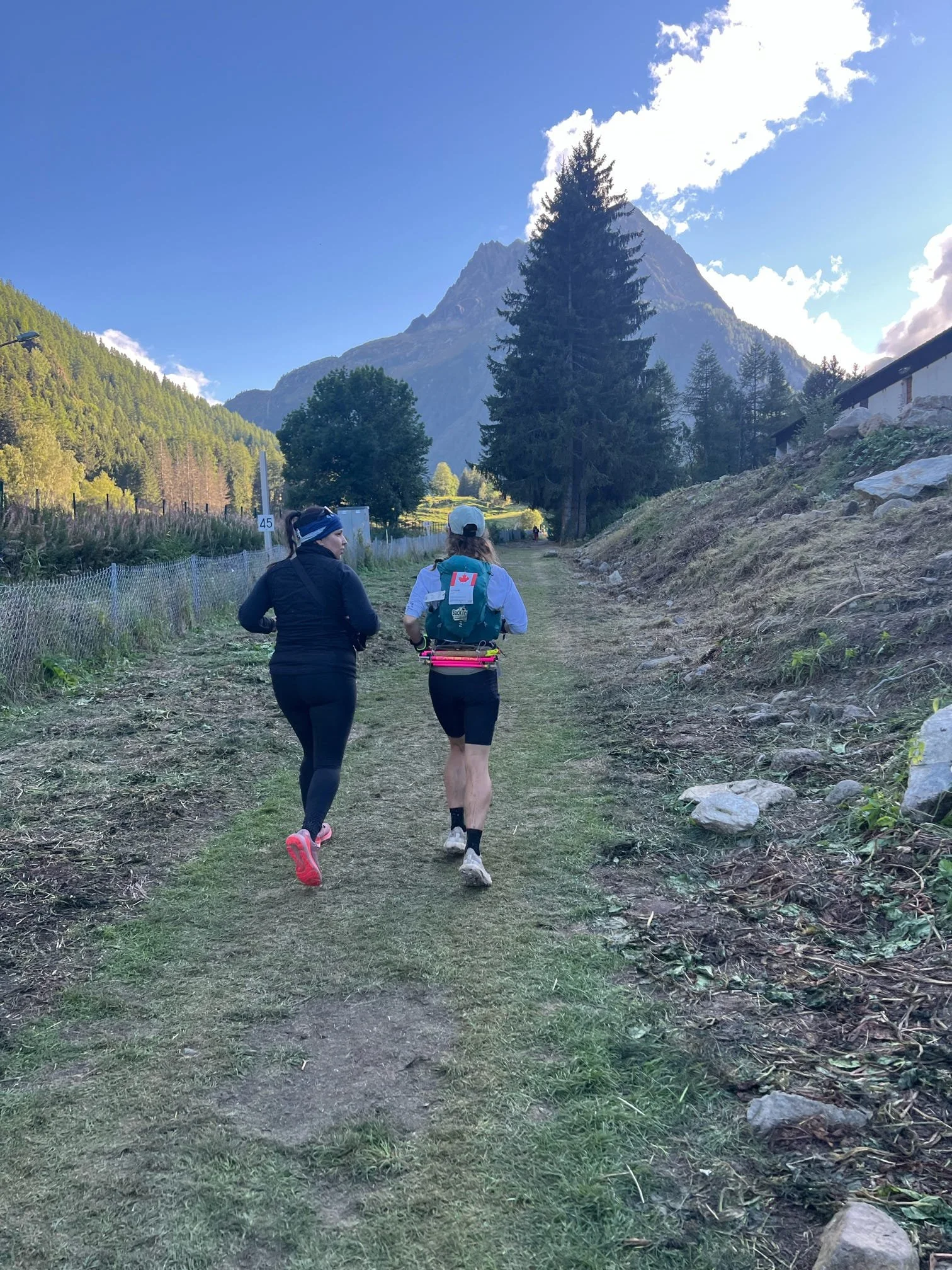
Running Kelsey out of the last crewed aid station in Vallorcine, 18km to the finish!
Little did we know at that time, but Kelsey’s little pity party lasted only a few moments later (she told us post-race). She came down the hill, gingerly, into the last aid station in Vallorcine, France (157km) with tired legs but a renewed spirit. She ca-cawed her way into the small town (at last year’s UTMB the crew took to using a crow’s “ca-caw,” attributed to the Fredericton Trail Runners, to find one another in crowds and to alert each other to an approaching runner) so we could spot her from afar, and as soon as she spotted me, she exclaimed, “I love running!”. A message to let us know that she had pulled herself out of the dark cave of negativity and was ready to finish the race. She flew through the aid station with her dad Noel (under 5 minutes!), and Adam and I met her on the outside. I had prepared another intense pep talk, but with the change in mood, as I ran (lightly jogged) her out of the aid station the message was more calmly delivered: “it’s no longer time to be sad, it’s time to get mad – use that emotion and we will see you at the finish line”.
Kelsey had lost a couple of spots in the last bit but was still well ahead of her time from last year and well ahead of last year’s placement of 25th woman. So much so that we were able to catch the last train from Vallorcine straight to our chalet to get freshened up before heading to the finish line instead of taking the crew bus into central Chamonix.
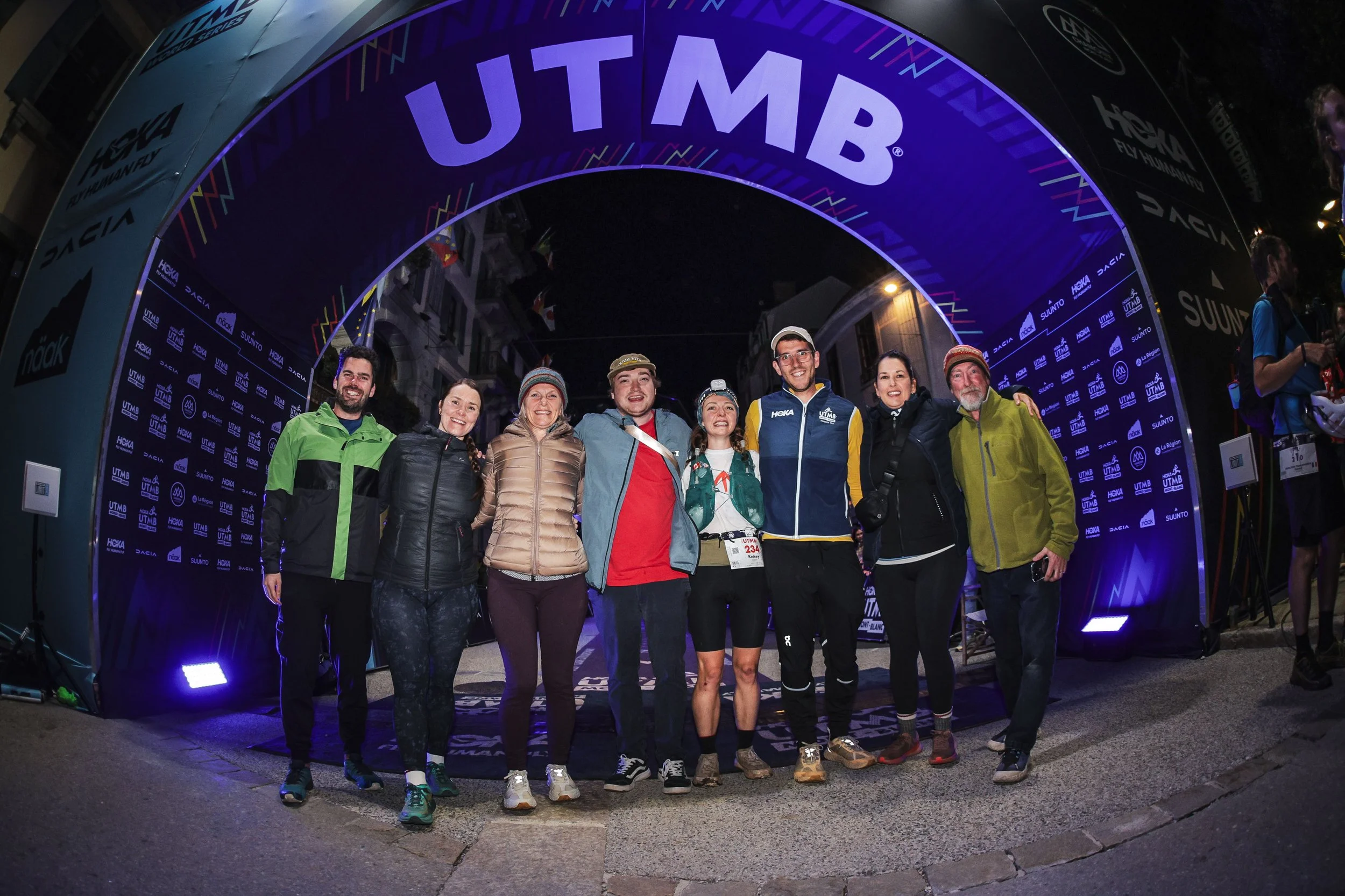
The whole crew with Kelsey at the finish line of UTMB 2025
Back at the finish line, the crowd was still large and loud, and at 10:08pm, after 28 hours and 23 minutes and about 10,000m of climbing, Kelsey crossed the UTMB finish line as the 16th woman (117th overall from 2492 starters). Much like Adam a few days before, Kelsey needed to be convinced that walking back to the chalet was probably not the best idea for her, so we managed to get an Uber, and make our way back to our chalet for some rest and recovery. Other goals that Kelsey reached were finishing top Canadian woman, executing her fueling plan well considering the weather conditions (no need to puke and rally!), and making good decisions in the snowy conditions (among others).
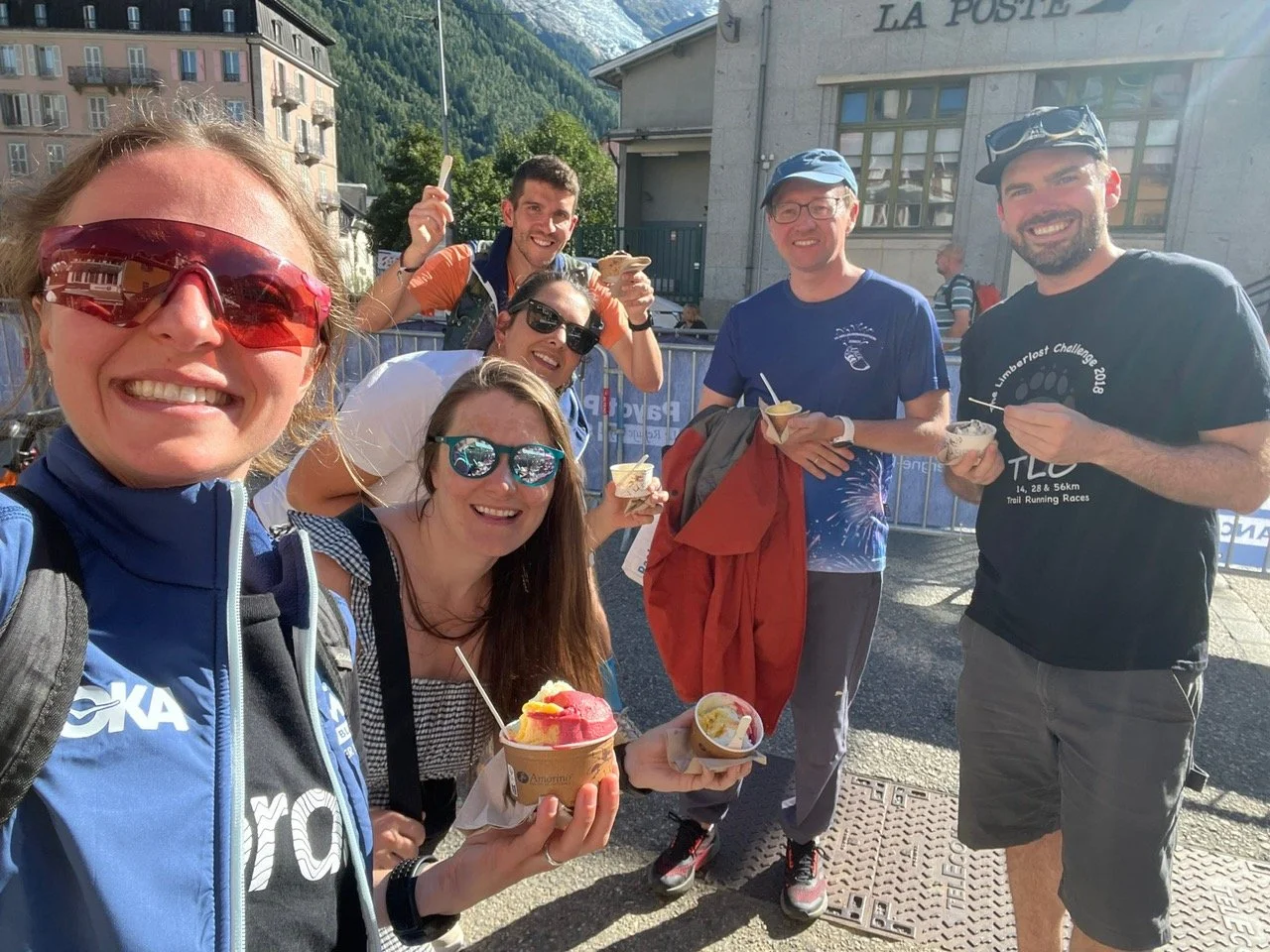
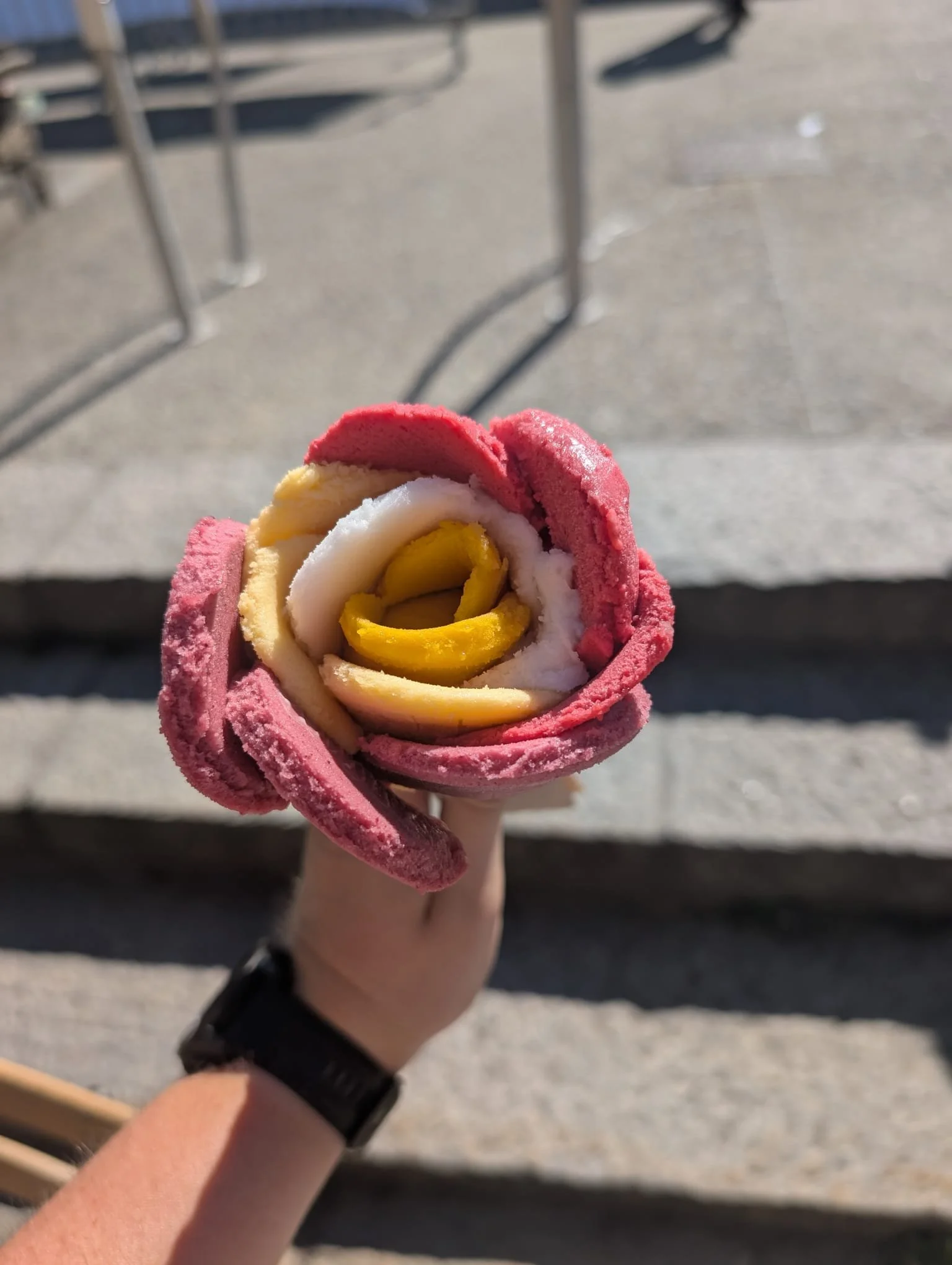
The following day, we made our way back to the finish line to watch the final finishers complete the grueling race just before 5pm on Sunday (about 47 hours on course) and have some recovery gelato – a very effective recovery strategy!
Lessons Learned & Observations
If you’ve read this far, I would like to offer some insights, lessons, and observations following my second opportunity to crew UTMB (and my first time crewing TDS). First, this year more than last, recognizing how course conditions and weather require everyone (runners and crew) to be adaptable and plan to change plans constantly. Both Adam and Kelsey executed their race plans beautifully and finished around the times that were within the expected bandwidth. But even so, needing to adapt to route changes, weather changes, and plan changes really pushes you do let go, and let go fast. Next, the energy and mindset coming into these races as a crew member had an impact on my own mental performance during both races. While I knew this, as a CMPC, it’s another thing to live it. Some things are within my control, and others not so much, but it was a good lesson to manage the controllables as best possible to be able to give as much of myself as a supportive crew member as I could. Communication before and after (debriefs) races and competitions are so important. Kelsey and I were able to debrief a few weeks following the race, and it provided me with the opportunity to check in with her on some of the decisions that we had made during the race and my fear that I had pushed her too hard at some spots. I hadn’t – but I did still harbour this fear that I had not performed as she needed in those moments, and in the end, I still want to learn about how to best support her in future races. And lastly, as a CMPC, our role is typically (and rightfully so) very much behind the scenes and on the sidelines. Competitions are typically watched from the audience or from afar. Being a part of an ultramarathon crew team is a different experience in that you are “in it”. Not only do you interact with the athletes mid-competition, but in some cases, you are the person in the aid stations, in the middle of it all, having direct impact, in real-time. That experience can be exhilarating and scary all at once. The first time around in 2024, I had sort of an ignorance is bliss approach – being a rookie crew member and relying a lot on more experienced crew members. 2025 was a combination of “know better, do better” and feeling a bit more pressure to perform as a crew member – a pressure that I felt privileged with which to be entrusted.
Needless to say, I’ve already started considering how I can fit more ultra race crew assignments into my schedule in the next couple of years and look forward to continuing learning about how to support these incredible humans.